In Class 10 physics, understanding electrical measurements is a key part of learning about circuits and electricity. One of the most important instruments in this study is the ammeter, which is used to measure electric current in a circuit. To use an ammeter effectively, it is crucial to understand its least count, which determines the precision of the measurements. The concept of least count is simple but essential, as it allows students and experimenters to measure current accurately and interpret results correctly. A clear understanding of the least count of an ammeter not only helps in practical experiments but also lays a strong foundation for higher studies in physics and electronics.
What is an Ammeter?
An ammeter is an electrical instrument used to measure the current flowing through a circuit. It is always connected in series with the circuit so that the entire current passes through it. Ammeters can measure current in units of amperes (A), milliamperes (mA), or even microamperes (µA) depending on their design and sensitivity. There are analog and digital types of ammeters, but in Class 10 experiments, analog ammeters are commonly used to teach the concept of current measurement and least count.
Structure and Functioning of an Analog Ammeter
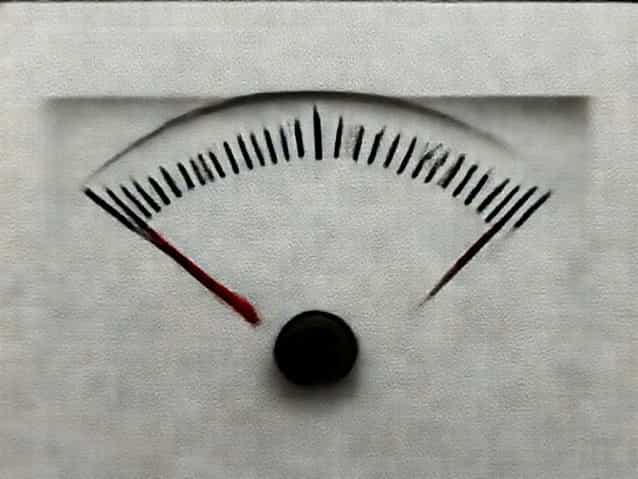
Analog ammeters typically consist of a moving coil, a pointer, a scale, and a spring mechanism. When current flows through the coil, it experiences a magnetic force that causes the pointer to deflect along the scale. The amount of deflection is proportional to the current, allowing the user to read the value on the calibrated scale. The scale is usually divided into equal divisions to help measure current accurately, but the precision depends on the smallest division, which is where the concept of least count comes into play.
Understanding Least Count
Least count is defined as the smallest value of current that can be measured accurately with a given ammeter. It determines the precision of the instrument. In other words, the least count is the smallest difference between two consecutive readings on the ammeter scale. For any measurement, knowing the least count is essential because it tells the user how precise the reading is and how much error may be associated with it. In Class 10 experiments, understanding and calculating the least count helps students avoid incorrect measurements and improves their experimental accuracy.
Formula for Least Count
The least count of an ammeter can be calculated using the following formula
- Least Count = Value of one main scale division ÷ Number of divisions on the scale.
For example, if an ammeter has a scale of 0 to 3 amperes, divided into 30 equal divisions, the value of one division is 3 ÷ 30 = 0.1 A. Therefore, the least count of the ammeter is 0.1 A. This means the smallest current change that can be accurately read on this ammeter is 0.1 A. Any value smaller than this may not be measured accurately and may lead to experimental errors.
Importance of Least Count in Measurements
The least count of an ammeter is important for several reasons. First, it determines the precision of the measurements, which is crucial for scientific experiments. A smaller least count indicates a more precise instrument capable of measuring smaller changes in current. Second, knowledge of least count helps in calculating the experimental error. In practical experiments, students often need to report measurements along with possible errors, and the least count serves as a basis for estimating the maximum error in readings.
Relation with Accuracy and Error
The accuracy of an ammeter is closely related to its least count. The smaller the least count, the more accurate the reading. The maximum possible error in an analog ammeter is usually taken as ±1 least count. For example, if an ammeter has a least count of 0.05 A, the maximum error in measurement is ±0.05 A. Understanding this helps students report their experimental results correctly and improves the reliability of their measurements. This concept is also extended to other instruments, making least count a fundamental topic in physics experiments.
Examples and Calculation
Let us consider a few practical examples to understand the concept better. Suppose you have an ammeter with a range of 0-5 A, and the scale is divided into 50 equal parts. Each division represents 5 ÷ 50 = 0.1 A, so the least count is 0.1 A. If the pointer falls on the 23rd division, the reading will be 23 à 0.1 = 2.3 A. The possible error is ±0.1 A. Similarly, for a smaller range ammeter, say 0-1 A divided into 20 divisions, the least count will be 1 ÷ 20 = 0.05 A, allowing more precise readings for smaller currents.
Practical Tips for Using an Ammeter
- Always connect the ammeter in series with the circuit to ensure accurate measurement.
- Check the least count before starting the experiment to understand the precision limits.
- Read the scale carefully and note the division where the pointer lies to avoid parallax errors.
- Use an appropriate range ammeter for the expected current to get readings within the scale limits.
- Consider the least count when reporting measurements and calculating errors for scientific accuracy.
The concept of least count is fundamental in understanding how to measure electric current using an ammeter in Class 10 physics. It provides insight into the precision of the instrument and guides students in reporting accurate results. Knowing the least count helps in minimizing errors, interpreting readings correctly, and performing experiments with confidence. By understanding the structure of an ammeter, calculating the least count, and following careful measurement techniques, students can master the use of this essential instrument. This knowledge not only aids in Class 10 practical exams but also builds a foundation for higher studies in physics and electronics where precise current measurement is crucial.