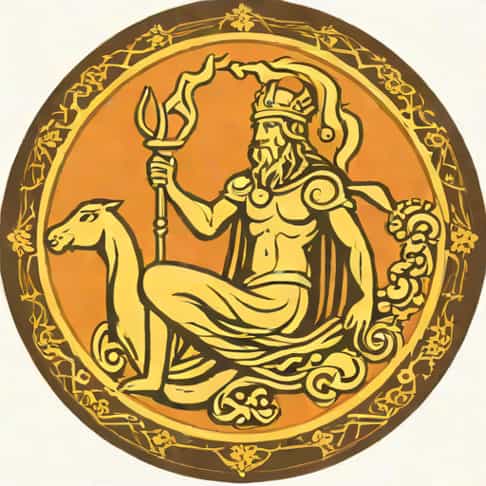
In Greek mythology, Cetus stands out as one of the most intriguing and mysterious creatures ever described in ancient stories. Often portrayed as a sea monster of enormous size, it appears in several myths connected to gods, heroes, and legendary kingdoms. What makes Cetus particularly fascinating is the way different sources depict it some describe it as a giant whale-like creature, others as a serpentine sea beast, and still others as a hybrid monster with features that defy simple categorization. These varied depictions help highlight how ancient people understood the ocean as a place full of both wonder and danger, especially in stories meant to teach lessons or celebrate heroic bravery.
The Origins of Cetus in Greek Mythology
Cetus first appears in the mythological tradition as a creature associated with the wrath of gods and the punishment of kingdoms. Its origin is not tied to a single event but rather to the broader idea of sea monsters used by deities to enforce justice or send warnings. In ancient Greek culture, the sea represented the unknown, so creatures like Cetus symbolized chaos and forces beyond human control.
Meaning of the Name Cetus
The term Cetus comes from the Greek word ketos, which means large sea creature or sea monster. This word does not refer to any one specific animal but instead to a category of giant sea creatures feared by sailors. Over time, the name grew to represent a mythical monster important enough to earn a place among the stars as the constellation Cetus.
Cetus in the Story of Andromeda
The most famous story involving Cetus centers on the princess Andromeda, daughter of King Cepheus and Queen Cassiopeia. This myth highlights the connection between human pride, divine punishment, and heroic rescue. It also provides one of the clearest descriptions of Cetus as a monstrous threat.
The Punishment of Cassiopeia
Cassiopeia, queen of Aethiopia, boasted that her daughter Andromeda was more beautiful than the Nereids-sea nymphs known for their stunning appearance. Offended by this claim, the sea god Poseidon decided to punish Cassiopeia’s kingdom. He sent Cetus to attack the coast and cause destruction, forcing the king and queen to seek guidance from the Oracle.
The Sacrifice of Andromeda
According to the Oracle, the only way to stop the monster was to sacrifice Andromeda to the sea creature. She was chained to a rock by the ocean, left as an offering to Cetus. The image of Andromeda bound at the shore became one of the most recognizable scenes in Greek art and storytelling.
Perseus Versus Cetus
The hero Perseus, traveling home after defeating the Gorgon Medusa, encountered Andromeda just before the monster reached her. Using Medusa’s head, Perseus turned Cetus to stone, saving the princess and ending the kingdom’s suffering. In some versions of the story, he kills the creature with his sword instead, while others say he used both the sword and Medusa’s power.
Physical Descriptions of Cetus
Because Cetus represents a category rather than one consistent creature, ancient writers described it in different ways. These variations help scholars understand how myths evolved based on cultural influences and artistic interpretations.
- A whale-like creature, massive and heavy
- A long, serpentine sea dragon
- A fish-like monster with scales and enormous jaws
- A hybrid beast combining reptilian and aquatic features
These descriptions mirror the fears of ancient sailors, who encountered strange marine animals and used mythology to explain their dangers.
The Constellation Cetus
One of the lasting legacies of Cetus is its place in the night sky. Ancient astronomers named a constellation after the sea monster, honoring the story and ensuring that it would be remembered for generations. The constellation Cetus sits near Pisces, Aquarius, and Aries, forming part of a celestial narrative that mirrors the myth of Andromeda and Perseus.
A Symbol of the Unknown Sea
In astronomy and mythology, constellations served not only as navigation tools but also as reminders of important cultural stories. Cetus, as a constellation, symbolizes the power of the sea and the dangers it holds. For the Greeks, mapping this creature onto the sky added a sense of order to the world even chaos had its place in the heavens.
Cetus in Broader Mythological Themes
The role of Cetus extends beyond its famous encounter with Perseus. Sea monsters like this often appear in myths as metaphors for challenges that heroes must face. Whether representing fear, chaos, or divine punishment, they allow storytellers to explore deeper themes.
Symbol of Challenge and Transformation
Throughout Greek mythology, heroes grow stronger by confronting powerful beasts. Cetus plays this role perfectly it stands between a kingdom and its safety, between a hero and his destiny. By defeating the monster, Perseus proves his bravery and earns his place among the great heroes.
Divine Justice and Cosmic Balance
Cetus also represents the gods’ influence over the mortal world. When humans displease the gods, the resulting disasters often appear in the form of monsters. In the case of Cassiopeia, her pride led to the arrival of Cetus, making the creature an instrument of divine balance.
How Cetus Is Interpreted Today
Modern interpretations of Cetus vary depending on medium and purpose. In literature, Cetus often appears as a giant whale or dragon-like beast. In film and art, it may be adapted as a creature inspired by deep-sea animals or ancient serpentine myths. People studying Greek mythology today often view Cetus as symbolic rather than literal, representing forces of nature or challenges that require courage and intelligence to overcome.
- In fantasy literature, Cetus-like creatures appear as sea dragons.
- In astronomy, the constellation continues to inspire stargazers.
- In mythology studies, Cetus serves as a case study for interpreting monster symbolism.
The adaptability of this myth shows how deeply it resonates with human imagination.
Cetus remains one of the most memorable sea creatures in Greek mythology, not only because of its dramatic story but also because of what it represents. Its connection to Andromeda and Perseus, its depiction as a monstrous force of nature, and its place among the stars all contribute to its lasting significance. Understanding what Cetus symbolizes-fear, challenge, divine will, and the mysteries of the ocean-helps bring life to ancient myths and reveals why these stories continue to captivate readers today. Through Cetus, we gain insight into how the Greeks viewed their world and how they transformed natural dangers into powerful narratives of courage and destiny.