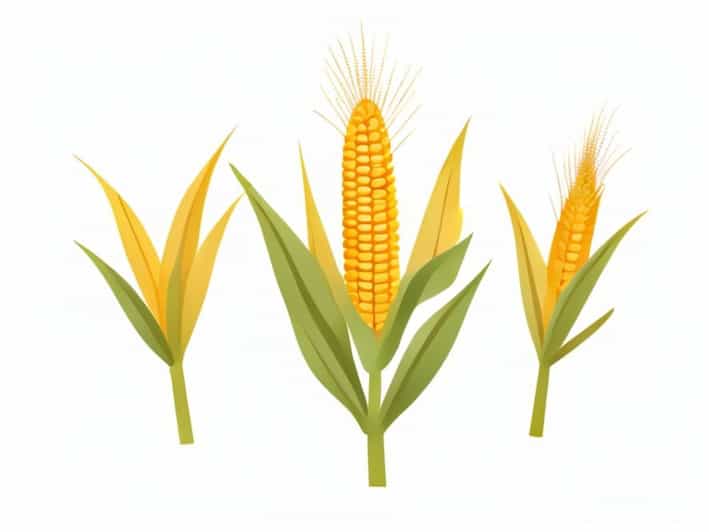
Anyone who has walked through a cornfield, visited a farm stand, or planted corn in a backyard garden has probably wondered how many ears of corn grow on one stalk. It seems like a simple question, but the answer depends on the type of corn, growing conditions, plant health, and purpose of cultivation. Understanding how many ears of corn per stalk helps farmers maximize production, gardeners manage expectations, and curious readers appreciate how this impressive crop actually grows. The truth is that nature, genetics, and environment all play a role in determining ear production.
Typical Number of Ears on a Corn Stalk
For most standard field corn and sweet corn varieties, the average number of ears per stalk is usually one to two. In commercial farming, especially with field corn used for livestock feed or industrial purposes, each stalk generally produces one fully developed primary ear. Some stalks may grow a second ear, but it is often smaller and less developed compared to the main ear.
Sweet corn, which is grown for fresh eating, freezing, and canning, often produces one to two ears per plant as well. However, most gardeners notice that the top ear tends to be larger, juicier, and better filled out, while the second ear may be shorter or have fewer kernels if growing conditions were not perfect.
Why Most Corn Stalks Produce Only One Main Ear
Even though corn plants have the capability to form multiple ear shoots, they naturally put their main energy into the largest, best-positioned ear. Corn is designed to focus resources like nutrients, water, and sunlight energy into producing high-quality kernels instead of many poorly developed ones.
Energy Distribution in Corn Plants
Corn plants are efficient survivors. They prioritize producing strong seed (the kernels) so the species continues. To do this, they usually channel most of their energy into one primary ear rather than splitting energy into several weaker ears. This ensures better pollination, full kernels, and strong seed development.
Factors That Influence How Many Ears of Corn per Stalk
Although the average is fairly predictable, several important factors affect ear production. These include genetics, growing conditions, plant spacing, nutrition, and stress levels.
Corn Variety or Type
Different types of corn behave differently. Varieties are bred for specific purposes, and ear production per stalk is influenced by that breeding.
- Field corngenerally produces one main ear.
- Sweet corncommonly produces one to two ears depending on the variety.
- Baby cornmay appear to produce many since ears are harvested immature, but each plant still produces limited ear structures.
- Specialty and heirloom varietiessometimes produce more than two ears if grown under ideal conditions.
Hybrid corn seeds used in modern agriculture are deliberately selected for predictable production, which is why many commercial fields look uniform and consistent.
Growing Conditions and Environment
Healthy ear growth depends heavily on conditions throughout the season. Even a plant with potential for multiple ears may only grow one if it experiences stress.
- Soil quality and fertility
- Sunlight exposure
- Rainfall and irrigation
- Temperature stability
- Wind protection
A well-cared-for corn stalk has a greater chance of producing two developed ears, while stressed plants may manage only one, or sometimes produce undersized ears.
Nutrition and Fertilization
Corn is a heavy feeder, meaning it requires plenty of nutrients. Nitrogen is especially important. Without proper fertilization, plants will prioritize survival instead of maximum production. Well-fed plants grown in nutrient-rich soil with adequate fertilizer support stronger stalks and better ear formation.
Plant Spacing and Population Density
How many ears of corn per stalk also depends on how close plants are to one another. In commercial agriculture, corn is planted densely to maximize overall yield per acre. While this setup encourages strong primary ear development, it often limits secondary ear growth.
In home gardens where plants have more space, corn sometimes develops a second ear more successfully because it has more light, nutrients, and room for root expansion.
Pollination Quality
Corn relies on wind pollination. Each kernel on the cob requires successful pollination. If pollination is poor due to weather or spacing, ears may be incomplete or small. As a result, some plants appear to produce fewer good ears, even if they technically tried to grow more.
Do Multiple Ears Always Mean More Yield?
It may seem logical that more ears per plant equals more production, but this is not always true. Farmers found that one strong ear per stalk often produces better yield quality than several smaller, poorly filled ears. That is why modern farming practices and plant breeding focus on maximizing the productivity and quality of one primary ear rather than pushing the plant to produce many.
Special Cases When Corn Produces More Than Two Ears
There are rare times when corn plants grow three or more ears. This happens mostly in ornamental or unusual heritage varieties, or in extremely ideal growing situations.
- Perfect weather conditions all season
- Rich, well-managed soil
- Excellent pollination success
- Low plant competition
Even then, extra ears are usually smaller. So although it is exciting to see, it is not the normal expectation for standard field or sweet corn.
How Gardeners Can Encourage Better Ear Development
People growing corn at home often want to know how to increase ear production and improve ear size. While you cannot change genetics, you can influence growing conditions.
- Plant in full sunlight
- Use nutrient-rich soil with compost or fertilizer
- Water consistently, especially during ear formation
- Maintain proper spacing to support healthy growth
- Plant corn in blocks to improve pollination
These simple steps usually help produce larger, fuller ears rather than simply trying to force multiple ears.
Understanding Expectations Helps Appreciation
Knowing how many ears of corn grow per stalk gives people a clearer understanding of how incredible corn production truly is. Even a single ear can contain hundreds of kernels, each one representing a fully developed seed created through careful biological processes. From agriculture businesses to backyard gardens, understanding ear production helps with planning yields and enjoying the growing experience.
So, how many ears of corn per stalk? The honest answer is that most corn plants grow one primary ear, with many varieties capable of producing a second smaller ear under good conditions. Genetics, nutrition, spacing, and environment all play critical roles in determining the final result. Whether you are farming, gardening, studying agriculture, or simply curious, knowing how corn develops its ears creates greater appreciation for this remarkable crop that feeds people and animals around the world.