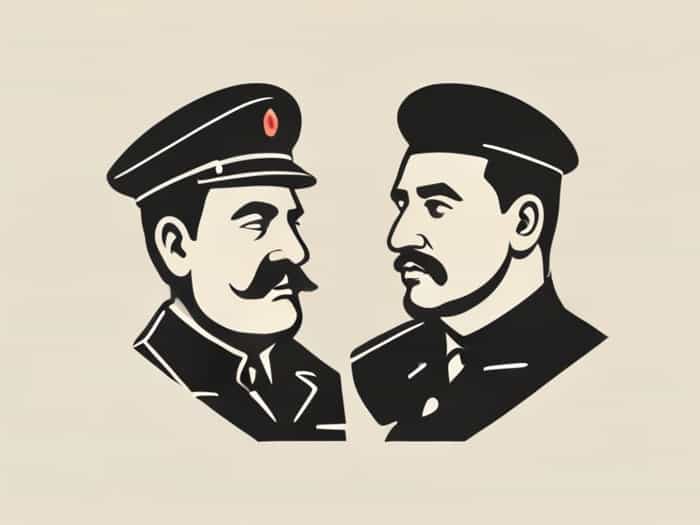
The relationship between Vladimir Lenin and Joseph Stalin was complex, evolving from collaboration to tension, and it significantly influenced the trajectory of the Soviet Union. Lenin, the leader of the Bolshevik Revolution and the architect of the Soviet state, recognized Stalin as a capable organizer within the Communist Party but also harbored concerns about his methods and temperament. Understanding their relationship provides insight into the early development of Soviet political structures, the dynamics of power, and the eventual rise of Stalin as the dominant figure after Lenin’s death. The interplay of ideology, personal ambition, and political maneuvering defined their interactions and shaped Soviet history.
Early Collaboration
Joseph Stalin joined the Bolshevik faction of the Russian Social Democratic Labour Party in the early 1900s and quickly gained a reputation as a committed revolutionary. Lenin and Stalin initially shared common goals overthrowing the Provisional Government, consolidating Bolshevik power, and establishing a socialist state. Stalin’s organizational skills, particularly in managing party affairs and building networks within the party apparatus, made him a valuable ally to Lenin during the revolutionary period and the civil war that followed.
Stalin’s Role in the Bolshevik Party
Stalin held several key positions in the Bolshevik Party, including General Secretary, which allowed him to control party appointments and manage communications across the party hierarchy. Lenin appreciated Stalin’s efficiency and dedication but was wary of his bureaucratic tendencies and potential for excessive centralization of power. Stalin’s role in the party machinery became increasingly important as the Bolsheviks consolidated control over Russia, giving him significant influence over organizational and administrative matters.
Lenin’s Warnings About Stalin
Despite their collaboration, Lenin grew increasingly concerned about Stalin’s character and behavior. He observed that Stalin could be rude, intolerant of criticism, and inclined toward authoritarian methods. These concerns were particularly evident in the period leading up to Lenin’s declining health, when he dictated his political testament, expressing apprehension about Stalin’s suitability for leadership.
The Testament and Criticism
In Lenin’s final testament, he criticized Stalin for being too rude and suggested that Stalin should be removed from his position as General Secretary. Lenin feared that Stalin’s consolidation of power could threaten the unity of the Communist Party and the principles of collective leadership. This warning reflects Lenin’s recognition of the potential dangers posed by Stalin’s ambition and his tendency to exercise authority without adequate consultation or regard for democratic processes within the party.
Ideological Alignment and Differences
Lenin and Stalin shared a commitment to Marxist-Leninist ideology and the goal of building a socialist state, but their approaches often diverged. Lenin emphasized the need for collective leadership, political debate, and maintaining a balance of power within the party. Stalin, on the other hand, increasingly favored centralization, discipline, and the use of coercion to achieve political objectives. These differences foreshadowed the methods Stalin would later employ to consolidate his rule and suppress opposition.
Stalin’s Rise After Lenin’s Death
Lenin died in 1924, leaving a power vacuum within the Communist Party. Stalin’s position as General Secretary allowed him to consolidate influence by placing allies in key roles and marginalizing rivals. He gradually outmaneuvered prominent Bolshevik leaders, such as Leon Trotsky, who had been considered a potential successor. Lenin’s earlier warnings about Stalin were largely ignored by the party leadership at the time, allowing Stalin to exploit the organizational advantages he had developed during Lenin’s tenure.
Impact on Soviet Politics
The relationship between Lenin and Stalin had lasting implications for Soviet politics. Lenin’s initial support and recognition of Stalin’s organizational abilities helped legitimize Stalin within the party, even as Lenin personally harbored doubts about his character. After Lenin’s death, Stalin’s consolidation of power reflected a continuation of bureaucratic control combined with political ruthlessness, shaping the structure of governance and the authoritarian nature of the Soviet state.
Lenin’s Legacy and Stalin’s Interpretation
Stalin positioned himself as Lenin’s true successor, emphasizing continuity with Lenin’s policies and ideology. He used Lenin’s name and legacy to justify his actions and suppress dissent, portraying himself as the defender of Leninist principles. This strategy allowed Stalin to consolidate authority and implement policies that extended beyond Lenin’s vision, including rapid industrialization, collectivization, and the establishment of a pervasive security apparatus.
Personal Dynamics and Political Strategy
The personal relationship between Lenin and Stalin was marked by both mutual respect and tension. Lenin valued Stalin’s loyalty and administrative competence but remained cautious about his temper and centralizing tendencies. Stalin, meanwhile, navigated this relationship carefully, balancing deference to Lenin with strategic positioning to enhance his influence. Their interactions illustrate how personal dynamics can intersect with political strategy in shaping historical outcomes.
Lessons from Their Relationship
Studying the Lenin-Stalin relationship provides insights into the importance of leadership qualities, organizational control, and succession planning in political movements. It highlights the challenges of balancing ideological goals with practical governance, as well as the potential risks posed by individuals who prioritize personal power over collective decision-making. Lenin’s warnings about Stalin serve as a historical example of the difficulties in managing ambitious subordinates within revolutionary or transformative political contexts.
The relationship between Lenin and Stalin was a mixture of collaboration, ideological alignment, and cautious distrust. Lenin recognized Stalin’s administrative talent and utility to the Bolshevik cause, but he also foresaw potential risks in Stalin’s temperament and centralizing tendencies. Following Lenin’s death, Stalin’s ascent reflected both the advantages of his organizational position and the party’s failure to heed Lenin’s concerns. This relationship profoundly influenced the development of the Soviet Union, demonstrating how personal dynamics, political strategy, and ideological commitments interact to shape the course of history. Understanding their interactions provides valuable context for the rise of Stalinism and the evolution of Soviet governance in the 20th century.