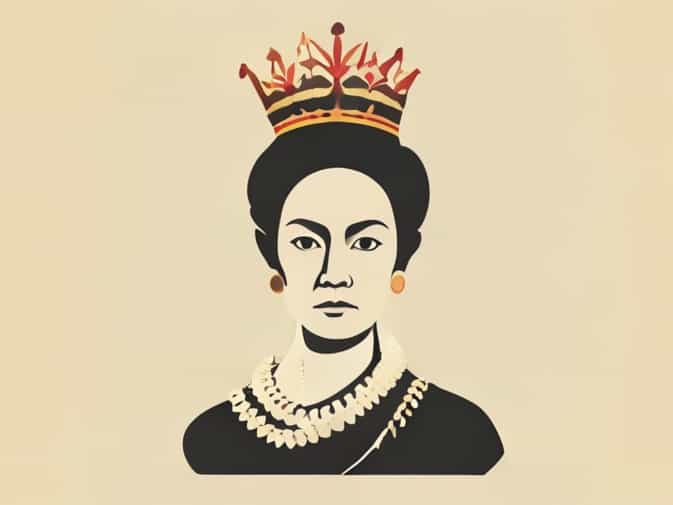
Queen Liliʻuokalani, the last reigning monarch of Hawaii, faced one of the most significant and controversial events in Hawaiian history the overthrow of the Hawaiian Kingdom. Her reign marked the end of centuries of indigenous Hawaiian monarchy and the beginning of a tumultuous period of political upheaval and foreign influence. The overthrow in 1893 was orchestrated by a combination of American businessmen, local political factions, and U.S. government officials, which ultimately led to the annexation of Hawaii by the United States. This historical episode remains a deeply impactful and debated moment, shaping Hawaii’s political, cultural, and social landscape for generations.
Queen Liliʻuokalani Life and Reign
Born Lydia Liliʻu Loloku Walania Wewehi Kamakaʻeha in 1838, Queen Liliʻuokalani was well-educated, musically talented, and deeply committed to preserving Hawaiian culture and sovereignty. She ascended to the throne in 1891 after the death of her brother, King Kalākaua, becoming Hawaii’s first and only queen regnant. Her reign, though brief, reflected her dedication to her people, her desire to strengthen Hawaiian traditions, and her effort to protect the monarchy from increasing foreign influence, particularly from American business interests.
Liliʻuokalani sought to implement a new constitution that would restore powers to the monarchy and reduce the influence of foreign elites in Hawaiian politics. She believed that Hawaiians should have more control over their own governance, resisting the growing pressure from American planters and businessmen who had economic and political interests in the islands. Her vision, however, collided with powerful factions intent on undermining Hawaiian sovereignty.
Economic and Political Context Leading to the Overthrow
In the late 19th century, Hawaii’s economy was dominated by sugar plantations, largely controlled by American and European businessmen. These elites wielded significant influence over the Hawaiian government and sought to secure their economic dominance through political means. The previous king, Kalākaua, had granted substantial concessions to foreign interests, creating tensions between native Hawaiians and the increasingly powerful business community.
Queen Liliʻuokalani’s efforts to draft a new constitution were seen as a threat by these groups. The proposed constitution would have restored voting rights and political power to native Hawaiians, which would have reduced the influence of the largely non-Hawaiian business class. This tension created a volatile political environment, setting the stage for a confrontation between the monarchy and foreign interests.
The Role of American Interests
American businessmen in Hawaii, primarily from the sugar industry, played a central role in orchestrating the overthrow. They sought annexation by the United States, which would protect their economic interests by eliminating tariffs and ensuring political control. These business leaders formed the Committee of Safety, a group that worked strategically to remove Queen Liliʻuokalani from power. They coordinated with U.S. officials and local militia forces, using both political and military pressure to achieve their goals.
The Overthrow of 1893
On January 17, 1893, the overthrow of Queen Liliʻuokalani was executed. The Committee of Safety, supported by a detachment of U.S. Marines from the USS Boston, staged a coup against the queen. The presence of American military forces intimidated royalist supporters and helped ensure the success of the coup without significant bloodshed. Queen Liliʻuokalani, facing overwhelming pressure and wanting to avoid violent conflict, yielded her authority under protest, believing that the United States government would eventually restore her to the throne.
The queen’s abdication was formalized through a written surrender, which explicitly stated her hope that the U.S. government would rightfully intervene to restore her sovereignty. Unfortunately, the immediate result was the establishment of a provisional government led by Sanford B. Dole and other members of the business elite, marking the end of the Hawaiian monarchy and the start of a new political era dominated by foreign interests.
International and Domestic Reactions
The overthrow of Queen Liliʻuokalani sparked controversy both within Hawaii and abroad. Native Hawaiians were deeply outraged, seeing the removal of their queen as an illegitimate and unjust seizure of power. The provisional government, however, quickly sought recognition from the United States and other countries to legitimize its authority.
Initially, U.S. President Benjamin Harrison supported annexation, but the incoming administration of President Grover Cleveland opposed it, condemning the overthrow as an illegal act against a sovereign nation. Cleveland launched an investigation and concluded that the removal of Queen Liliʻuokalani was improper and called for her restoration. Despite this, political and strategic pressures prevented immediate action, leaving the provisional government in control.
Impact on Hawaiian Society
The overthrow had profound effects on Hawaiian society. The monarchy had served as a unifying symbol of Hawaiian identity, culture, and governance. Its removal undermined native Hawaiian authority and allowed foreign economic and political interests to dominate the islands. Land ownership patterns shifted, favoring foreign settlers and large plantations, which marginalized native Hawaiians. Traditional governance structures and cultural practices faced significant challenges, as the new regime prioritized assimilation into American political and economic systems.
Queen Liliʻuokalani’s Legacy
Despite losing her throne, Queen Liliʻuokalani remained a respected figure and continued to advocate for her people. She dedicated herself to charitable work, education, and the preservation of Hawaiian culture and music. Her compositions, including the famous song Aloha ʻOe, have endured as symbols of Hawaiian identity and resilience. She wrote extensively about her experiences, including her imprisonment following a failed royalist counter-rebellion in 1895, providing historians with valuable insight into this turbulent period.
The queen’s unwavering commitment to her people and culture cemented her legacy as a symbol of Hawaiian sovereignty and resistance against colonial and foreign domination. Her story continues to inspire movements advocating for the rights of native Hawaiians and for the recognition of historical injustices.
Historical Significance
- The overthrow marked the end of Hawaii’s indigenous monarchy and paved the way for eventual annexation by the United States in 1898.
- It highlighted the influence of foreign economic interests in shaping political outcomes in strategically important regions.
- Queen Liliʻuokalani’s resistance became a symbol of cultural preservation and national identity for native Hawaiians.
- The event remains a key topic in discussions about sovereignty, reparations, and historical justice in Hawaii.
Contemporary Perspectives
Today, Queen Liliʻuokalani is remembered as a cultural and political icon. Her overthrow is widely regarded as a pivotal moment in Hawaiian history that shaped the trajectory of the islands’ relationship with the United States. Efforts to educate both Hawaiians and the broader public about this history continue, with museums, educational programs, and commemorative events honoring the queen and advocating for recognition of Hawaii’s complex past.
Her story serves as a reminder of the importance of sovereignty, cultural preservation, and resistance against unjust political forces. It also emphasizes the need to understand the interplay of economic interests, international influence, and local governance in shaping historical events.
The overthrow of Queen Liliʻuokalani represents one of the most significant and tragic moments in Hawaiian history. While orchestrated by foreign interests and aided by political and military maneuvering, it had profound consequences for the people, culture, and governance of Hawaii. Queen Liliʻuokalani’s resilience, dedication to her people, and commitment to preserving Hawaiian identity have ensured that her legacy endures. Her story continues to resonate as a symbol of cultural pride, resistance, and the ongoing struggle for justice and recognition of Hawaii’s unique heritage. Understanding this history allows for a deeper appreciation of the complexities of colonial influence and the enduring strength of indigenous leadership.