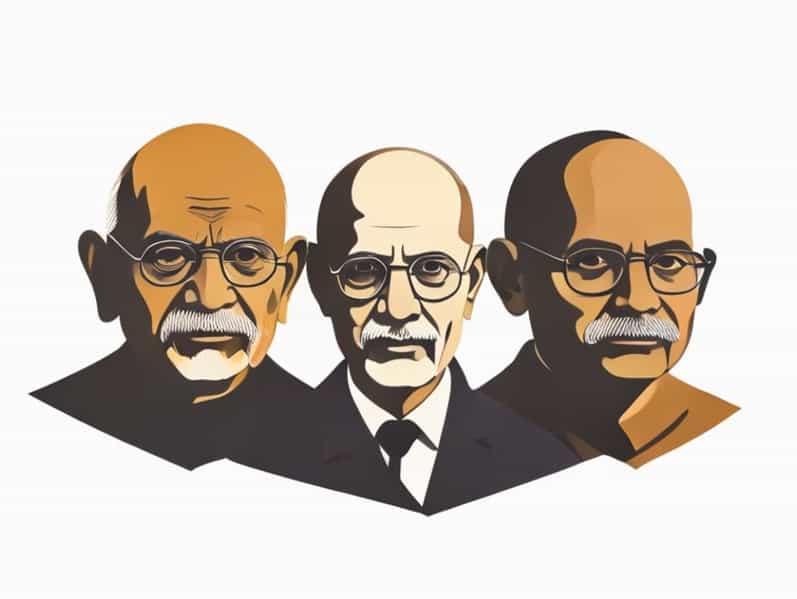
Mahatma Gandhi, Jawaharlal Nehru, and Yasser Arafat are three prominent figures whose leadership and ideologies shaped the political landscapes of their respective regions in the 20th century. Gandhi and Nehru played central roles in India’s struggle for independence and its early years as a sovereign nation, promoting ideals of nonviolence, democracy, and social reform. Yasser Arafat, on the other hand, became an emblematic leader for the Palestinian cause, advocating for national self-determination and statehood under highly complex geopolitical circumstances. Examining these leaders together offers insight into the diverse methods of leadership, political vision, and the challenges of guiding movements in times of conflict and transformation.
Mahatma Gandhi The Father of Nonviolence
Mahatma Gandhi, born Mohandas Karamchand Gandhi, is remembered as the foremost advocate of nonviolent resistance. His philosophy of satyagraha, or truth-force, became the foundation of India’s struggle against British colonial rule. Gandhi’s approach emphasized moral persuasion, civil disobedience, and mass mobilization to achieve political and social objectives. He believed in addressing injustices through peaceful protest, encouraging ordinary citizens to participate actively without resorting to violence. Gandhi’s influence extended beyond India, inspiring global leaders and movements seeking justice through nonviolent means.
Key Principles of Gandhi’s Leadership
- NonviolenceGandhi insisted on achieving political goals without causing harm to others, emphasizing moral integrity over brute force.
- Civil DisobedienceHe promoted strategic acts of noncompliance with unjust laws to challenge colonial authority.
- Self-RelianceGandhi encouraged economic self-sufficiency through initiatives such as spinning and weaving, symbolizing independence from British industrial control.
- Unity and InclusivityHe sought to bridge religious and social divides, promoting harmony between Hindus, Muslims, and marginalized communities.
Jawaharlal Nehru Architect of Modern India
Jawaharlal Nehru, India’s first Prime Minister, emerged as a visionary leader committed to nation-building and democratic governance. As a close associate of Gandhi during the independence movement, Nehru internalized the principles of freedom and social justice while also emphasizing scientific progress and industrial development. His tenure focused on establishing institutions, promoting education, and ensuring economic planning aimed at modernizing India. Nehru’s foreign policy of non-alignment sought to maintain India’s independence in the international arena, avoiding entanglement in Cold War rivalries.
Major Contributions of Nehru
- Democratic InstitutionsNehru worked to strengthen parliamentary democracy and the rule of law.
- Economic PlanningHe introduced five-year plans to promote industrialization and social development.
- Scientific and Technological GrowthNehru emphasized education, research, and infrastructure development.
- Non-Aligned Foreign PolicyHe maintained a neutral stance in global politics, advocating for peaceful coexistence among nations.
Yasser Arafat Leader of the Palestinian Cause
Yasser Arafat emerged as the central figure in the Palestinian liberation movement, serving as Chairman of the Palestine Liberation Organization (PLO) and later President of the Palestinian Authority. Arafat’s leadership spanned decades of struggle, negotiation, and conflict with Israel, aiming to establish a sovereign Palestinian state. His approach combined armed resistance, diplomacy, and international advocacy. While Arafat remains a controversial figure due to the methods used and political complexities, his enduring commitment to Palestinian self-determination has made him an iconic symbol of the region’s quest for national identity.
Core Elements of Arafat’s Leadership
- National Self-DeterminationArafat focused on achieving political autonomy and statehood for Palestinians.
- Diplomatic EngagementHe engaged with global leaders and participated in peace negotiations, including the Oslo Accords.
- Resistance and Armed StruggleArafat’s strategy involved using armed resistance at times, reflecting the pressures and limitations of the political context.
- Symbolic LeadershipArafat became a unifying figure for diverse Palestinian factions, maintaining legitimacy through visibility and advocacy.
Comparing Leadership Styles
While Gandhi, Nehru, and Arafat operated in different political environments, their leadership shares similarities and contrasts. Gandhi’s moral-based, nonviolent approach contrasts with Arafat’s engagement in armed resistance, yet both aimed to mobilize populations toward national goals. Nehru’s pragmatic governance emphasized institution-building and modernization, complementing Gandhi’s moral philosophy while translating independence into functional statehood. Together, their approaches highlight the complexity of leadership, where ideals, context, and strategy must intersect to address political challenges effectively.
Impact on Society and Legacy
Gandhi’s legacy lies in inspiring nonviolent movements globally, from civil rights campaigns in the United States to anti-apartheid efforts in South Africa. Nehru’s influence is seen in India’s democratic institutions, education systems, and ongoing commitment to scientific progress. Arafat’s impact resonates in the Palestinian quest for statehood and international recognition, shaping discourse on self-determination and regional politics. Each leader’s legacy continues to inform contemporary political thought, offering lessons on resilience, moral conviction, and the complexities of navigating conflict.
International Perspectives
The global perception of these leaders reflects their varying strategies and outcomes. Gandhi is universally celebrated as a moral and spiritual leader whose philosophy transcends national boundaries. Nehru is recognized as a pragmatic statesman who laid the foundation for India’s modern identity. Arafat’s international image is more nuanced, admired by some for his dedication to his people and criticized by others for his involvement in conflict. Collectively, they illustrate how leadership is shaped by culture, history, and geopolitical pressures, influencing both national narratives and global understanding.
Lessons for Modern Leadership
- Ethical LeadershipGandhi demonstrates the power of principles and moral persuasion.
- Institutional VisionNehru shows the importance of governance, planning, and education in nation-building.
- Persistence Under AdversityArafat exemplifies resilience and commitment to a cause despite complex challenges.
- Balancing Ideals and PragmatismEach leader faced the task of translating ideology into actionable policies or strategies.
The lives and leadership of Gandhi, Nehru, and Yasser Arafat offer rich insights into the ways individuals shape history and society. Gandhi’s philosophy of nonviolence, Nehru’s institution-building and modernization, and Arafat’s advocacy for Palestinian self-determination highlight the diversity of approaches to leadership under challenging circumstances. While their methods and contexts differed, all three leaders navigated complex political landscapes with vision and resilience. Studying their legacies provides a nuanced understanding of leadership, strategy, and the enduring influence of individuals on national and international stages.