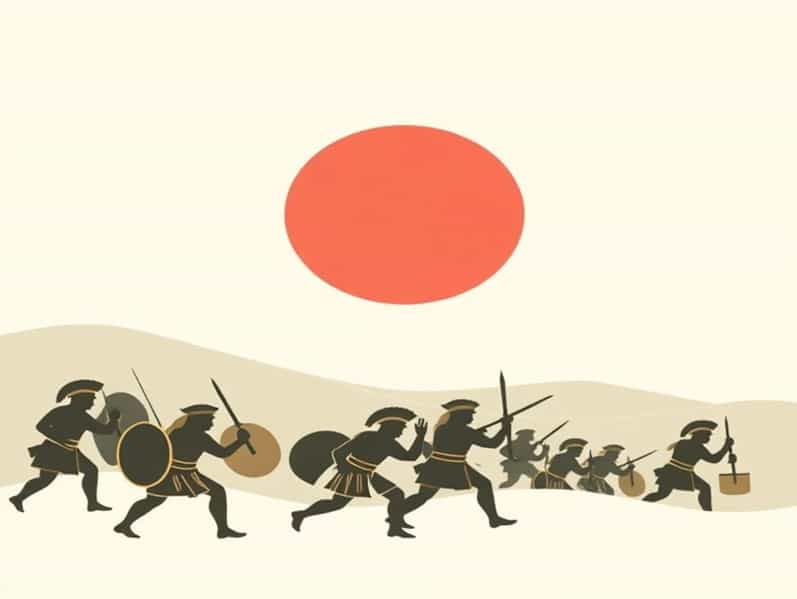
The Battle of Plataea, fought in 479 BCE, was one of the most decisive and bloodiest engagements of the Greco-Persian Wars. It marked the final major land battle between the Persian Empire, led by Mardonius, and the Greek city-states, united under Spartan general Pausanias. The clash not only ended Persian ambitions in mainland Greece but also left behind staggering casualties on both sides. Understanding the casualties of the Battle of Plataea gives insight into the scale of the conflict, the effectiveness of Greek tactics, and the end of Persian expansion in Europe.
Historical Context of the Battle
The Battle of Plataea took place one year after the famous naval victory at Salamis. Although the Persians suffered a defeat at sea, they still maintained a strong land army in Greece. Under Mardonius, the Persian forces regrouped in Boeotia, hoping to draw the Greeks into open combat. Meanwhile, the Greek coalition led by Sparta and including Athens, Corinth, and other city-states marched north to confront them near the town of Plataea.
Both armies were massive by ancient standards. Herodotus, the primary source for the battle, claimed the Persian army numbered around 300,000 men, though modern historians estimate closer to 70,000 120,000. The Greek forces were said to number around 110,000, including heavily armed hoplites and lighter infantry. This concentration of manpower made Plataea one of the largest battles of the ancient world, and the resulting casualties were enormous.
The Course of the Battle
The Greeks and Persians faced each other across the Asopus River for several days, both waiting for the other to make the first move. The Persians, confident in their archers and cavalry, tried to cut off Greek supply lines, forcing the Greeks to relocate to more favorable ground near Plataea. During this maneuver, a misunderstanding in orders caused the Greek line to break into separate groups something Mardonius saw as an opportunity to attack.
The Persians launched their assault, focusing on the Spartans and Tegeans on one flank. The fighting was fierce and brutal, with the Greeks holding firm behind their bronze shields and spears. Despite the numerical advantage of the Persians, their lighter armor and shorter weapons made them vulnerable in close combat. Once Mardonius was killed in battle, Persian morale collapsed, turning the engagement into a rout.
Greek Casualties
Compared to the Persians, the Greeks suffered relatively light losses at Plataea, though their casualties were still significant. Ancient sources vary in their estimates. According to Herodotus, the Greeks lost around 159 men, a surprisingly low number given the battle’s scale. However, most modern historians agree that this figure likely underrepresents the true toll, as it may only count Spartan and Tegean casualties.
Considering the intensity of the fighting, it is more reasonable to assume that Greek casualties ranged between 1,000 and 2,000 soldiers. The majority of these losses were likely among the heavily armed hoplites on the front lines, particularly the Spartans, Tegeans, and Athenians who bore the brunt of Persian attacks.
Spartan and Tegean Losses
The Spartans, under Pausanias, fought with remarkable discipline and endurance. They faced the core of Mardonius’s elite Persian infantry, including the Immortals. Despite the advantage of superior armor and tactics, the Spartans suffered losses from arrows and hand-to-hand combat before breaking the Persian line. The Tegeans, fighting beside them, also endured heavy fighting and contributed significantly to the victory.
While Herodotus mentions only 91 Spartans and 16 Tegeans killed, it is possible that these numbers reflect a focus on notable warriors or citizens, not total casualties. Given the ferocity of the engagement, the real losses may have been several times higher.
Athenian and Allied Casualties
On the other flank, the Athenians confronted the Persian Greek allies, including the Thebans, who had sided with the Persians. The battle here was equally intense, with hoplite phalanxes clashing in brutal melee combat. The Athenians eventually triumphed, but not without losing many men. Their casualties, while not precisely recorded, likely numbered several hundred.
Other Greek contingents, including those from Corinth, Megara, and Phlius, also sustained losses in secondary skirmishes and in the pursuit of fleeing Persian troops after the main battle. Overall, Greek casualties reflected both their tactical superiority and the heavy price of such a decisive confrontation.
Persian Casualties
The Persian losses at the Battle of Plataea were catastrophic. Herodotus claims that out of an army of 300,000, only about 40,000 survived. While this figure is likely exaggerated, the defeat was undeniably devastating. Modern historians estimate that the Persians lost between 20,000 and 70,000 men a staggering proportion of their total force.
The reasons for such heavy Persian casualties were numerous. First, the Persians fought with lighter armor often linen or leather against the bronze breastplates and helmets of Greek hoplites. Their weapons, primarily short spears and bows, were ineffective in the close-quarter phalanx fighting. Second, the death of Mardonius caused chaos and panic, leading to a disorganized retreat in which many Persians were cut down.
Death of Mardonius and Its Impact
Mardonius’s death was a turning point in the battle. He was struck down by a Spartan warrior, and once word of his fall spread through the Persian ranks, discipline crumbled. The army’s command structure fell apart, and what had been a fierce fight turned into a massacre. Many Persian soldiers drowned in the Asopus River while trying to flee, while others were hunted down by the pursuing Greeks.
Losses Among Allied Forces
The Persians were not alone in their suffering. Their Greek allies, including Thebans and other Boeotians, also sustained heavy losses. When the battle turned against the Persians, many of these local forces were caught in the chaos. Some Theban leaders were later executed by the victorious Greeks for collaborating with the enemy. The destruction of the Persian camp after the battle added to the overall death toll, as thousands of non-combatants servants, laborers, and camp followers were killed or captured.
The Aftermath and Burial of the Dead
Following the victory, the Greeks erected a trophy on the battlefield and buried their dead with honors. The Persians, however, were denied formal burials; their corpses were left scattered across the plain of Plataea as a grim reminder of their defeat. Archaeological evidence suggests that mass graves may have been dug for practical reasons, given the scale of the casualties and the threat of disease.
The battle site became sacred to the Greeks, symbolizing their unity and courage. Annual sacrifices were performed at Plataea to honor those who fell, ensuring that the memory of their sacrifice endured. The massive Persian casualties served as both a warning and a source of pride for the Greek city-states, proving that disciplined citizen-soldiers could overcome even the mightiest empire.
Casualty Estimates Summary
- Greek casualtiesApproximately 1,000 2,000 dead (Herodotus claims only 159)
- Persian casualtiesBetween 20,000 and 70,000 dead (Herodotus claims 259,000)
- Greek allies of PersiaThousands killed or captured, particularly Thebans
Strategic Importance of the Battle
The enormous casualties suffered by the Persians at Plataea effectively ended their campaign in Greece. The defeat shattered their army’s strength and morale, while their surviving forces retreated north. Shortly afterward, the Greeks launched successful offensives against Persian-held territories, including the Battle of Mycale, which destroyed the remaining Persian fleet.
For the Greeks, Plataea was both a military triumph and a moral victory. The high Persian casualties underscored the effectiveness of the hoplite phalanx and the value of unity among the Greek city-states. Sparta’s leadership, Athens’s resilience, and the collective courage of the allied forces laid the foundation for a new era of Greek dominance in the Aegean world.
Legacy of the Battle of Plataea
The Battle of Plataea’s significance cannot be overstated. It not only ended the Persian invasion but also preserved Greek independence, allowing the cultural and political development that would later shape Western civilization. The casualty figures though varying across sources reflect the immense human cost of that victory.
For ancient historians, the scale of the Persian losses served as a testament to divine justice and Greek valor. For modern scholars, it illustrates how superior tactics, discipline, and unity can overcome overwhelming odds. The plains of Plataea became a symbol of resistance, sacrifice, and the high price of freedom.
The Battle of Plataea was one of the most consequential confrontations of the ancient world, marked by staggering casualties and monumental implications. While Greek losses were relatively small, the Persian army suffered a crushing defeat that ended its ambitions in Europe. The numbers tens of thousands dead speak to the ferocity of the fighting and the resolve of both sides. In the ashes of that battlefield, Greece secured its future and reshaped the course of history.