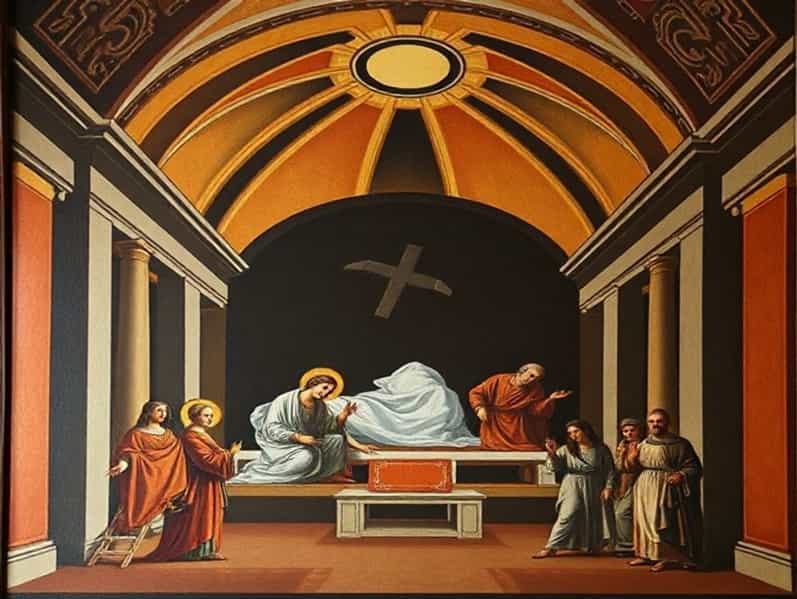
The artist of the Sistine Chapel ceiling, Michelangelo Buonarroti, is one of the most celebrated figures in the history of art. His work inside the Vatican’s Sistine Chapel is not just a masterpiece of the Renaissance, but a turning point in Western art itself. The paintings are filled with emotional power, anatomical precision, and divine beauty, reflecting both the spiritual and human aspects of creation. Understanding the artist of the Sistine Chapel means exploring the life, skill, and vision of Michelangelo, whose genius forever changed the world’s perception of art and religion.
Michelangelo Buonarroti The Artist Behind the Sistine Chapel
Michelangelo di Lodovico Buonarroti Simoni was born in 1475 in Caprese, Italy. From a young age, he showed remarkable artistic talent. His early studies under the patronage of Lorenzo de’ Medici in Florence allowed him to learn from the great sculptors and painters of his time. Though Michelangelo considered himself primarily a sculptor, he was commissioned by Pope Julius II in 1508 to paint the ceiling of the Sistine Chapel a project that would take four years and become one of the greatest artistic achievements in human history.
Michelangelo was reluctant to take on the task at first. He saw himself as a sculptor, not a painter, and had little experience with fresco painting, a demanding technique involving pigments applied to wet plaster. Yet, driven by his sense of duty and ambition, he accepted the challenge. The result was an extraordinary vision that combined theology, human anatomy, and dynamic composition in a way that had never been seen before.
The Creation of the Sistine Chapel Ceiling
The Sistine Chapel ceiling was painted between 1508 and 1512. It stretches over 12,000 square feet and includes more than 300 figures. The central panels depict nine scenes from the Book of Genesis, beginning with the Separation of Light from Darkness and culminating in the Drunkenness of Noah. Surrounding these scenes are prophets, sibyls, and ancestors of Christ, all rendered with a mastery of form and movement that defines the essence of Renaissance art.
The Process and Techniques
Michelangelo worked under extremely difficult conditions. He had to design a complex scaffolding system to reach the curved ceiling high above the chapel floor. Contrary to popular myth, he did not paint lying flat on his back; instead, he worked standing up, craning his neck upward for hours each day. This physically demanding process took a toll on his health, yet his determination never faltered.
The fresco technique required him to paint quickly before the plaster dried. He mixed his pigments with water, applying them to freshly laid plaster in small sections called giornate. Each giornata had to be completed within a single day to ensure the colors bonded properly with the surface. Despite the technical challenges, Michelangelo achieved remarkable precision in the composition, blending vivid colors and subtle shading that gave life to each figure.
Iconic Scenes and Symbolism
Among all the frescoes on the Sistine Chapel ceiling, certain scenes stand out as defining moments of Western art. These include
- The Creation of AdamPerhaps the most iconic image of the Renaissance, it shows God reaching out to give life to Adam. The near-touching hands have become a universal symbol of human potential and divine connection.
- The Creation of EveThis scene portrays Eve emerging from Adam’s side as God blesses her, symbolizing the birth of humanity’s dual nature.
- The Expulsion from the Garden of EdenMichelangelo masterfully contrasts the innocence of Adam and Eve before the Fall with their shameful expulsion afterward, emphasizing the themes of sin and redemption.
- The DelugeDepicting the great flood, this powerful image shows the struggle of humanity against divine punishment, filled with movement and emotion.
Each panel is deeply symbolic, blending Christian theology with humanistic ideals. Michelangelo’s figures possess both physical strength and spiritual depth, representing the Renaissance belief in the harmony between divine creation and human intellect.
The Influence of Michelangelo’s Vision
The Sistine Chapel ceiling redefined what art could be. Before Michelangelo, most religious art followed rigid, two-dimensional conventions. His frescoes broke free from that, introducing depth, anatomy, and emotion into sacred art. His portrayal of biblical figures as muscular, dynamic humans reflected his deep study of the human body, inspired by classical sculpture.
Michelangelo’s work influenced generations of artists, including Raphael, Caravaggio, and Bernini. His techniques in anatomy and foreshortening became central to the Baroque style, and his focus on expressive movement laid the foundation for modern artistic expression. Even centuries later, the ceiling remains a standard of artistic excellence and a source of inspiration for painters and sculptors around the world.
The Artist’s Relationship with the Popes
Michelangelo’s relationship with the Vatican was complex. His patron, Pope Julius II, was both a supporter and a demanding taskmaster. Their fiery interactions often led to tension, but the Pope’s insistence on grand projects pushed Michelangelo to his limits, resulting in his greatest achievements. Later, Pope Clement VII and Pope Paul III also commissioned him for additional works, includingThe Last Judgmenton the altar wall of the same chapel, painted nearly 25 years after the ceiling’s completion.
The Last Judgment, created between 1536 and 1541, reflects Michelangelo’s evolution as an artist. The tone is darker and more dramatic, filled with tension and divine power. Together, the ceiling and the altar wall form a unified vision of creation, sin, and salvation, making the Sistine Chapel one of the most complete expressions of human faith in art history.
Michelangelo’s Legacy Beyond the Sistine Chapel
Although the Sistine Chapel ceiling is considered Michelangelo’s most famous painting, his legacy extends far beyond it. He was also a master sculptor, known for works likeDavidandPietà, which demonstrate his unmatched ability to capture human emotion in marble. His architectural designs, including the dome of St. Peter’s Basilica, further cemented his reputation as a multi-talented genius of the Renaissance.
What made Michelangelo exceptional was his combination of technical skill, intellectual depth, and emotional honesty. His art was not just decoration; it was a spiritual statement. Every figure he created whether carved in stone or painted on plaster seemed alive with divine energy.
Preservation of the Sistine Chapel Frescoes
Over the centuries, the Sistine Chapel ceiling faced damage from candle smoke, humidity, and time. By the 20th century, much of Michelangelo’s original color had been obscured by grime and restoration attempts. A massive cleaning and restoration project took place between 1980 and 1994, revealing the vibrant colors and delicate details that had been hidden for centuries.
The restoration was controversial at first, as some critics claimed it altered the tone of Michelangelo’s work. However, the project ultimately allowed the world to see the frescoes as they were originally intended full of light, contrast, and life. Today, the Sistine Chapel continues to attract millions of visitors each year, all eager to witness the genius of Michelangelo up close.
The Human Side of the Artist
Despite his fame, Michelangelo was known for his solitary and intense personality. He was deeply religious, often conflicted between his devotion to God and his pursuit of artistic perfection. His letters and poetry reveal a man who struggled with the burden of his talent and the expectations placed upon him. Yet, this inner conflict only deepened his art, giving it the emotional and spiritual resonance that continues to move people today.
The artist of the Sistine Chapel, Michelangelo Buonarroti, stands as a symbol of human creativity at its highest form. His work inside the chapel is more than a masterpiece it is a dialogue between heaven and earth, between God and humanity. Through his frescoes, Michelangelo captured the essence of creation, faith, and human struggle with unparalleled beauty. The Sistine Chapel ceiling remains a testament to what art can achieve when guided by passion, intellect, and an unshakable belief in divine inspiration. Centuries later, Michelangelo’s vision continues to inspire not only artists but all who seek meaning and beauty in the world around them.