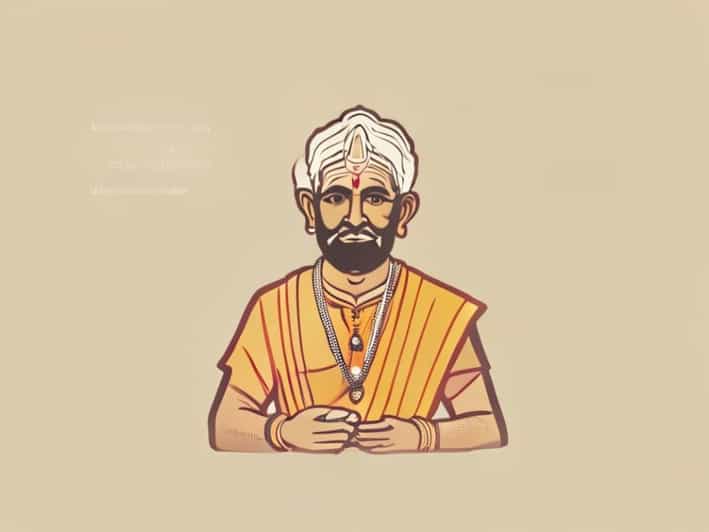
Srinivasa Ramanujan, one of the greatest mathematical minds in history, had an educational journey that was both extraordinary and unconventional. Born in 1887 in Erode, India, Ramanujan showed remarkable mathematical talent from a very young age. Despite facing numerous challenges and limited formal education, he developed a deep understanding of complex mathematical concepts independently. His education was shaped by self-study, innate curiosity, and an unyielding passion for numbers. Understanding the educational background of Ramanujan provides valuable insight into how genius can flourish even outside traditional academic pathways.
Early Childhood and Schooling
Ramanujan’s early education began in a small school in Kumbakonam, where he displayed a natural affinity for mathematics. While he was an average student in other subjects, his mathematical abilities stood out remarkably. By the age of 11, he had mastered advanced trigonometry and developed his own methods for solving mathematical problems. His teachers recognized his extraordinary talent, but the rigid school curriculum and emphasis on other subjects sometimes conflicted with his unique learning style. Despite these limitations, Ramanujan’s dedication to mathematics never wavered.
Influence of Family
Ramanujan’s family played an important role in his education, particularly in supporting his interests despite financial constraints. His father, K. Srinivasa Iyengar, was a clerk in a cloth merchant’s shop, and his mother, Komalatammal, encouraged his curiosity and learning. Although the family could not afford extensive educational resources, they nurtured his talent as much as possible. They allowed him access to mathematical books, which became his primary source of knowledge and inspiration in the early years.
Self-Study and Mathematical Discovery
One of the defining aspects of Ramanujan’s education was his reliance on self-study. He discovered the book A Synopsis of Elementary Results in Pure and Applied Mathematics by G.S. Carr, which contained thousands of mathematical formulas. This book became a pivotal resource for Ramanujan, allowing him to explore complex topics far beyond the standard school curriculum. Using this book as a foundation, he began developing his own theorems and solutions, often without formal proofs. His approach combined intuition, creativity, and rigorous mental calculation, demonstrating an extraordinary level of self-directed learning.
Challenges in Formal Education
Despite his genius, Ramanujan struggled with formal education systems. He often neglected subjects such as English, physics, and chemistry, which led to difficulties in examinations and progression in standard schooling. He failed twice in the college examinations, not due to a lack of intelligence, but because his focus on mathematics left him unprepared for other subjects. These setbacks, however, did not diminish his mathematical pursuits. In fact, they highlighted the contrast between conventional education systems and unconventional genius.
Higher Education Attempts
Ramanujan briefly attended Government Arts College in Kumbakonam, where he continued to excel in mathematics. Later, he joined Pachaiyappa’s College in Madras, where he intended to pursue a degree in mathematics. During this period, his dedication to mathematical research intensified, and he spent hours working on problems independently. Unfortunately, his neglect of non-mathematical subjects resulted in failure to graduate formally. Despite not obtaining a degree, Ramanujan’s self-directed education had already reached an advanced level, demonstrating that formal credentials were not essential for his extraordinary achievements.
Independent Research and Publications
By his early twenties, Ramanujan had produced a substantial body of work, including numerous theorems, identities, and series that were previously unknown. He corresponded with mathematicians in India and abroad, sharing his findings despite limited formal education. His ability to derive complex results without formal proofs puzzled many but also attracted the attention of scholars worldwide. This period of independent research solidified his reputation as a mathematical prodigy, proving that self-study, curiosity, and persistence could rival traditional academic education.
Connection with Cambridge University
The turning point in Ramanujan’s educational journey came when he wrote to G.H. Hardy, a prominent mathematician at Cambridge University. In 1913, he sent a letter filled with his mathematical results, which immediately impressed Hardy. Recognizing Ramanujan’s genius, Hardy invited him to Cambridge, providing access to formal mentorship, academic resources, and collaboration opportunities. This opportunity bridged the gap between Ramanujan’s self-taught knowledge and formal higher education, allowing him to make groundbreaking contributions to mathematics on a global scale.
Learning in Cambridge
At Cambridge, Ramanujan adapted to a structured academic environment while continuing his original research. Hardy and other mathematicians guided him in developing formal proofs and refining his work. Ramanujan’s unique educational background, combining intuition with self-study, complemented the rigorous analytical methods at Cambridge. This collaboration produced some of his most famous contributions, including discoveries in number theory, continued fractions, and modular forms. His time at Cambridge exemplifies how self-directed learning can integrate with formal education to produce exceptional results.
Educational Legacy of Srinivasa Ramanujan
Ramanujan’s educational journey continues to inspire students, educators, and mathematicians around the world. His life demonstrates that passion, dedication, and self-directed learning can lead to extraordinary achievement even without conventional academic success. Educational institutions now celebrate his contributions, and his story is often cited as an example of how nurturing talent and providing opportunities can unlock genius. Ramanujan’s approach to learning highlights the value of curiosity, creativity, and persistence in education.
Lessons from His Education
Several important lessons can be drawn from Ramanujan’s educational experience
- Self-study can complement or even surpass formal education in certain areas of expertise.
- Passion and dedication are critical to mastering complex subjects.
- Support from family and mentors can significantly influence educational outcomes.
- Conventional academic success is not the only measure of intellectual ability.
- Collaboration and mentorship can help refine natural talent into world-class achievement.
The education of Srinivasa Ramanujan was unconventional yet profoundly effective, driven by an innate love for mathematics and an extraordinary ability to learn independently. From his early childhood in Kumbakonam to his transformative years at Cambridge University, his journey highlights the importance of curiosity, perseverance, and mentorship. Despite facing setbacks in formal schooling, Ramanujan’s genius emerged through self-directed study and relentless dedication. His life continues to inspire mathematicians and learners worldwide, proving that true education transcends textbooks and examinations, rooted instead in passion, creativity, and the pursuit of knowledge.