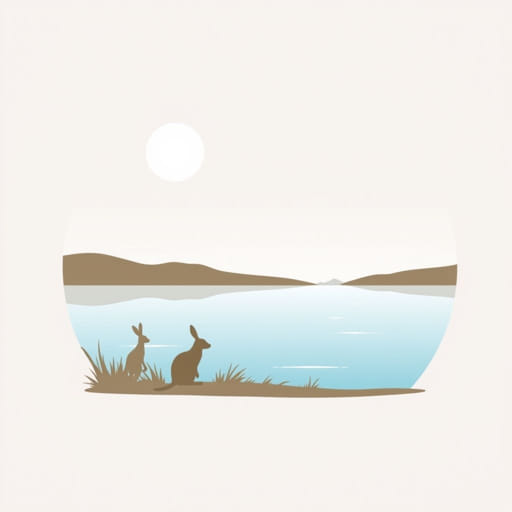
The Lake Mackay Hare Wallaby, once native to the arid and remote regions of central Australia, was a unique marsupial species that captured the imagination of naturalists and Indigenous communities alike. Small, elusive, and adapted to the harsh desert environment, this animal is now considered extinct. Understanding the Lake Mackay Hare Wallaby offers valuable insights into Australia’s fragile ecosystems, the impact of environmental change, and the importance of conservation efforts aimed at preserving biodiversity in desert landscapes. This topic explores the species’ history, characteristics, habitat, and the reasons for its decline.
Scientific Classification and Name
The Lake Mackay Hare Wallaby was scientifically namedLagorchestes asomatus. It was first described in 1943, and the name ‘asomatus’ reflects its elusive and ghost-like presence in the wild. Belonging to the family Macropodidae, it was closely related to other hare wallabies, such as the spectacled hare wallaby (Lagorchestes conspicillatus) and the rufous hare wallaby (Lagorchestes hirsutus).
Key Taxonomy:
- Kingdom: Animalia
- Phylum: Chordata
- Class: Mammalia
- Order: Diprotodontia
- Family: Macropodidae
- Genus: Lagorchestes
- Species: Lagorchestes asomatus
Physical Characteristics
The Lake Mackay Hare Wallaby was a small and agile marsupial, resembling a cross between a rabbit and a miniature kangaroo. It had a compact body, long hind limbs adapted for hopping, and a soft, dense fur coat that helped it survive the desert climate.
Distinguishing Features:
- Size similar to a large rabbit, weighing around 1.5 to 2 kilograms
- Large eyes and ears for enhanced vision and hearing at night
- Coarse, grey-brown fur with lighter underparts
- Long hind feet and strong tail for balance and speed
These physical adaptations enabled the Lake Mackay Hare Wallaby to move swiftly through spinifex grass and scrubland, evade predators, and withstand the extreme temperatures of central Australia.
Habitat and Geographic Range
The Lake Mackay Hare Wallaby was believed to be endemic to the regions surrounding Lake Mackay, a large salt lake located on the border of Western Australia and the Northern Territory. Its preferred habitat included desert grasslands, sandy plains, and spinifex-covered dunes.
Habitat Characteristics:
- Arid and semi-arid regions with sparse vegetation
- Spinifex grass providing cover and nesting areas
- Sandy soils suitable for digging burrows or resting spots
Despite its harsh environment, this habitat offered the wallaby food sources such as grasses, seeds, and herbs. The species was nocturnal and solitary, sheltering during the day and emerging at night to feed.
Behavior and Diet
Not much is known about the behavior of the Lake Mackay Hare Wallaby due to its rarity and the limited number of sightings before extinction. However, assumptions based on related species give us some clues about its likely habits and diet.
Likely Behaviors:
- Solitary or possibly living in loose colonies
- Nocturnal foraging to avoid daytime heat
- Shy and quick to flee from perceived threats
Diet:
The wallaby was herbivorous, feeding on:
- Spinifex and native grasses
- Seed pods and herbaceous plants
- Occasional roots and shoots during dry periods
Water was likely obtained from food sources and dew, as open water was scarce in their environment.
Conservation Status and Extinction
The Lake Mackay Hare Wallaby is now listed as extinct by the International Union for Conservation of Nature (IUCN). The last confirmed records date back to the early 20th century, and since then, no reliable sightings have been reported, despite extensive searches.
Causes of Extinction:
- Predation: The introduction of feral predators such as foxes and cats had a devastating effect on small, ground-dwelling marsupials.
- Habitat Destruction: Cattle grazing, land clearing, and changing fire regimes disrupted natural ecosystems.
- Competition: Invasive species like rabbits competed for food and burrowing spaces.
- Lack of Resilience: Small population size and limited distribution made the species vulnerable to sudden environmental changes.
The extinction of the Lake Mackay Hare Wallaby highlights the challenges faced by many of Australia’s desert-dwelling mammals, which are highly sensitive to introduced threats and environmental shifts.
Significance to Indigenous Communities
For the Indigenous people of central Australia, animals like the Lake Mackay Hare Wallaby played an important role in traditional life. It was part of the local diet, featured in Dreamtime stories, and contributed to the understanding of ecological patterns.
Indigenous knowledge systems often included detailed observations of animal behavior, movement, and survival strategies. Some oral traditions may hold information about the wallaby’s disappearance or past abundance, which can offer valuable clues for researchers today.
Lessons and Legacy
The story of the Lake Mackay Hare Wallaby serves as a reminder of how fragile certain ecosystems are and how quickly extinction can occur when multiple threats converge. It also underlines the importance of early conservation efforts and monitoring, particularly in remote or difficult-to-access regions.
Key Conservation Takeaways:
- Protecting habitat before it is heavily altered is critical.
- Managing invasive species remains one of the biggest challenges in Australian conservation.
- Collaborating with Indigenous communities can lead to better outcomes in wildlife preservation.
- Preserving genetic records and documentation is essential for scientific understanding, even post-extinction.
Possibilities for the Future
While the Lake Mackay Hare Wallaby is considered extinct, there remains a faint possibility that undiscovered populations could exist in remote parts of central Australia. Some researchers believe that vast and unexplored areas may still harbor rare species, and occasional reports of sightings continue to spark interest.
In recent years, advances in genetic research have also opened discussions about ‘de-extinction’ or the possibility of reviving extinct species. Though still theoretical, such efforts rely on detailed biological samples and preserved specimens, which exist in small numbers in museums and research institutions.
The Lake Mackay Hare Wallaby represents a lost piece of Australia’s unique natural heritage. Its quiet disappearance echoes the fate of many small mammals in Australia’s arid regions. By studying its life, habitat, and extinction, we not only honor the species but also reinforce the urgent need for conservation practices that protect today’s endangered wildlife from a similar fate. Through education, habitat restoration, and community collaboration, future extinctions can be prevented, preserving the delicate balance of ecosystems for generations to come.