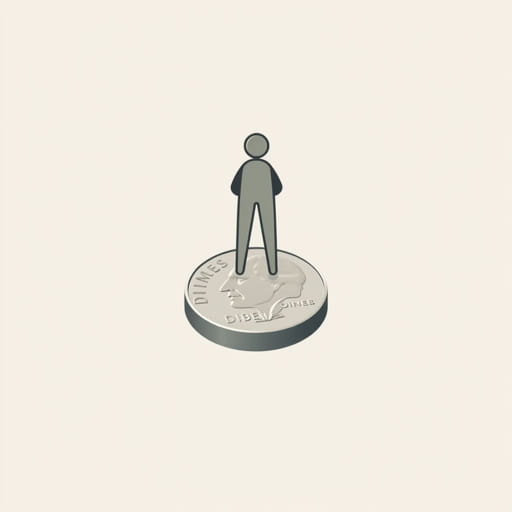
When most people look at the small, silver-colored coin known as the dime, they may not immediately consider the historical significance of the face engraved on it. However, the figure on the U.S. dime is not just decorative it represents a prominent figure in American history. Understanding who is on the dime provides a fascinating glimpse into the values and decisions of the United States Mint, as well as a deeper appreciation for the history of American leadership and innovation. This topic explores in detail who is on the dime, why he was chosen, and what his presence on this coin symbolizes.
Who Is Depicted on the U.S. Dime?
The person featured on the U.S. dime is Franklin Delano Roosevelt, commonly known as FDR. He served as the 32nd president of the United States and is widely regarded as one of the most influential American leaders of the 20th century. Roosevelt’s profile has been on the dime since 1946, just a year after his death.
Why Franklin D. Roosevelt Was Chosen
Franklin D. Roosevelt’s appearance on the dime is not arbitrary. He was selected to honor his extraordinary leadership during a time of economic hardship and global conflict. Roosevelt led the United States through the Great Depression and World War II. But more importantly, he is closely associated with the March of Dimes campaign, a nationwide effort to combat polio a disease he personally battled for most of his adult life.
Roosevelt contracted polio in 1921, which left him paralyzed from the waist down. Despite his disability, he went on to become governor of New York and later president. In 1938, he helped launch the National Foundation for Infantile Paralysis, which later became known as the March of Dimes. The foundation’s efforts, including its fundraising and awareness campaigns, eventually led to the development of a polio vaccine.
The History of the Dime’s Design
Before Roosevelt’s face was featured, the dime bore the image of Lady Liberty in various forms. The Mercury dime, used from 1916 to 1945, is one of the most well-known versions. It depicted a winged Liberty head that many mistook for the Roman god Mercury. However, with Roosevelt’s death in April 1945 and his strong association with the fight against polio, there was a national push to honor him with a coin.
The U.S. Mint quickly moved to redesign the dime. Sculptor John R. Sinnock was commissioned to design the new coin, and his depiction of Roosevelt was officially released in 1946 on what would have been FDR’s birthday, January 30. Since then, Roosevelt’s profile has remained on the obverse (front) of the dime.
Design Features of the Roosevelt Dime
- Obverse (front): A left-facing portrait of Franklin D. Roosevelt with the word LIBERTY, the motto IN GOD WE TRUST, the year of minting, and the initials JS for John Sinnock.
- Reverse (back): A torch in the center representing liberty, flanked by an olive branch symbolizing peace and an oak branch signifying strength. The words UNITED STATES OF AMERICA, E PLURIBUS UNUM, and the denomination ONE DIME also appear.
Symbolism Behind the Dime
The dime represents more than monetary value; it is a symbol of American resilience, leadership, and public health progress. Roosevelt’s face on the coin is a tribute not only to his presidency but also to his personal struggle and advocacy. His leadership of the nation through some of its darkest times, combined with his legacy in public health, makes him an especially meaningful choice for such a commonly circulated coin.
Roosevelt and the March of Dimes
One of the most significant connections between Roosevelt and the dime is the March of Dimes campaign. The organization encouraged Americans to send in one dime just ten cents to help fund research for a cure to polio. Millions of Americans responded. The term March of Dimes became synonymous with hope, unity, and collective action, and Roosevelt was its symbolic figurehead.
Therefore, placing his image on the dime not only honored him as a leader but also served as a lasting reminder of the fight against polio and the power of small contributions toward a common goal. This made the dime both a functional coin and a national emblem of perseverance and progress.
Changes and Continuity Over Time
While other U.S. coins have undergone various redesigns, the Roosevelt dime has remained largely unchanged since its release in 1946. The consistency of the design reflects Roosevelt’s enduring legacy and the public’s continued admiration for his contributions. The materials of the coin, however, did change. Originally made of 90% silver, the dime shifted to a clad composition of copper and nickel in 1965 due to rising silver prices and coin shortages.
Despite this change in materials, the look of the Roosevelt dime has endured, making it one of the longest-lasting coin designs in American history. This continuity underscores the symbolic and historical weight of Roosevelt’s image and the importance of maintaining that legacy through everyday currency.
Why This Coin Still Matters
In the world of numismatics (the study or collection of currency), the dime is more than just a ten-cent piece. It’s a daily reminder of the values Franklin D. Roosevelt stood for courage in the face of adversity, compassion for the suffering, and belief in public service. Every time a dime changes hands, it silently echoes the story of a man who overcame personal limitations and led a nation through unprecedented challenges.
The Dime in Modern Culture
Even today, phrases like drop a dime or March of Dimes continue to resonate in American culture. Although technology has reduced the use of physical coins in some areas, the dime still circulates widely. Collectors often seek early versions, such as silver dimes or dimes from certain mints, but the everyday user also encounters the Roosevelt dime regularly.
So, who’s on the dime? It’s Franklin D. Roosevelt a leader whose impact went far beyond politics. He inspired a generation to endure economic hardship and war, and he empowered the nation to fight disease through collective action. His profile on the dime is a tribute not just to his presidency, but to his enduring influence on American society and history. The next time you hold a dime, take a moment to remember the man whose face it bears and the story it tells.