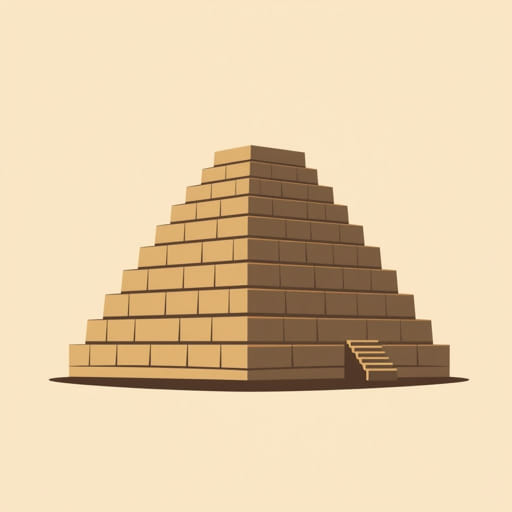
The Ziggurat of Ur, located in present-day southern Iraq, is one of the most iconic structures of ancient Mesopotamia, representing the religious, political, and architectural achievements of the Sumerian civilization. Before its modern reconstruction, the Ziggurat stood as a monumental testament to the ingenuity and devotion of the ancient builders, though it had suffered centuries of erosion, looting, and natural decay. Studying the Ziggurat of Ur before reconstruction allows historians and archaeologists to better understand its original form, construction techniques, and the cultural context in which it was built. It offers a glimpse into the religious life of Ur, the city’s urban organization, and the symbolic importance of monumental architecture in asserting both divine and royal authority.
Historical Context of the Ziggurat of Ur
The Ziggurat of Ur was constructed during the reign of Ur-Nammu around the 21st century BCE, at the height of the Third Dynasty of Ur. This period marked a renaissance in Sumerian art, architecture, and governance following the political instability that had affected Mesopotamia. Ziggurats, as stepped temple platforms, were central to Sumerian religious practices, serving as the dwelling place of the city’s patron deity. The Ziggurat of Ur was dedicated to Nanna, the moon god, highlighting the close connection between religion and state power. Before reconstruction, the Ziggurat was already an imposing structure, though its original grandeur had been compromised by centuries of exposure to the elements and human activity.
Construction and Design
Before modern restoration efforts, the Ziggurat of Ur was a massive three-tiered structure made primarily from mud bricks and baked bricks for the exterior façade. Its dimensions, originally estimated to be about 64 meters long, 46 meters wide, and 30 meters high, reflected the ambition of its builders to create a monumental and enduring religious site. Key architectural features included
- Stepped terraces rising toward a temple at the summit, symbolizing a connection between the earth and the divine.
- Thick, sloping walls designed to provide structural stability and support the enormous weight of the upper tiers.
- Multiple stairways and ramps that allowed priests and officials to ascend to the top temple, underscoring the ceremonial function of the structure.
- An orientation aligned with the cardinal points, reflecting the Sumerians’ interest in cosmology and the integration of sacred geometry into urban planning.
State Before Modern Reconstruction
Before reconstruction, the Ziggurat of Ur had deteriorated considerably, leaving only the core structure visible. Erosion caused by wind and rain had stripped away the outer layers of baked brick, exposing the mud-brick core to further decay. Vegetation had taken root in some areas, and earthquakes over the centuries had damaged the terraces and foundations. Archaeological surveys conducted in the early 20th century revealed evidence of collapsed stairways, missing bricks, and structural instability, all of which highlighted the challenges of preserving such an ancient monument. Despite its ruined state, the Ziggurat still conveyed the impressive scale and engineering skills of the Sumerians.
Archaeological Discoveries
Excavations conducted by Sir Leonard Woolley and other archaeologists in the 1920s and 1930s provided critical insights into the pre-reconstruction state of the Ziggurat. They uncovered
- Foundations and terrace remnants that indicated the original layout and stepped design.
- Artifacts such as pottery, inscriptions, and votive offerings that shed light on the religious practices conducted at the site.
- Structural evidence of ramps and stairways used to access the top temple, illustrating the ceremonial use of the Ziggurat.
- Signs of repair and modifications made by later rulers, showing that the monument had been maintained and adapted over centuries.
Religious and Cultural Significance
The Ziggurat of Ur functioned as a focal point for religious life in the city. As the supposed dwelling of Nanna, the moon god, it symbolized the divine authority that underpinned the power of the ruling elite. Priests performed rituals, offered sacrifices, and conducted ceremonies at the temple on the summit, reinforcing the spiritual hierarchy of the city. Before reconstruction, the Ziggurat’s weathered appearance also testified to its long-standing cultural importance, serving as a landmark for the city’s inhabitants and a reminder of Ur’s religious heritage.
Urban and Political Role
Beyond its religious function, the Ziggurat played a central role in the urban and political landscape of Ur. Positioned prominently in the city center, it acted as a visual anchor and a symbol of royal authority. The construction of such a monumental structure demonstrated the ruler’s ability to mobilize resources, organize labor, and assert control over the population. Even in a deteriorated state before reconstruction, the Ziggurat communicated the city’s power, stability, and cultural sophistication to visitors and inhabitants alike.
Challenges of Preservation
Preserving the Ziggurat of Ur in its pre-reconstruction state presented significant challenges. The original materials, particularly mud bricks, were highly vulnerable to environmental conditions, leading to continuous erosion. Looting and human activity further compromised the structure, as bricks were removed or damaged over time. Additionally, the lack of modern engineering techniques in ancient times meant that some parts of the Ziggurat had shifted or collapsed, complicating efforts to study and stabilize the monument. Archaeologists had to carefully document the surviving elements to understand the original design and ensure that reconstruction efforts would be historically accurate.
Insights from Pre-Reconstruction Study
Studying the Ziggurat of Ur before reconstruction provided invaluable insights into ancient Mesopotamian architecture and engineering. Researchers could observe the layering of mud bricks, the use of baked bricks for external reinforcement, and the structural adaptations made to withstand the harsh environment. Evidence of repairs and modifications offered clues about the longevity and maintenance practices employed by the Sumerians. By examining the Ziggurat in its ruined state, historians gained a more nuanced understanding of both the technical skill and the cultural priorities of the civilization that built it.
Legacy and Influence
The pre-reconstruction Ziggurat of Ur continues to inspire scholars, architects, and enthusiasts interested in ancient Mesopotamian culture. Even in its weathered form, the structure conveys the ambition, religious devotion, and organizational capacity of the Sumerians. Its influence can be seen in subsequent architectural traditions, particularly in the development of monumental stepped structures throughout the ancient Near East. By studying the Ziggurat before reconstruction, researchers have been able to preserve historical knowledge and provide a foundation for modern restoration projects that honor the monument’s original design.
The Ziggurat of Ur before reconstruction stands as a testament to the enduring power of ancient architecture, religious devotion, and cultural achievement. Despite centuries of erosion, natural decay, and human activity, the remnants of this monumental structure reveal the ingenuity and ambition of the Sumerians. Archaeological study of the pre-reconstruction Ziggurat offers critical insights into construction techniques, religious practices, and urban planning in ancient Mesopotamia. By examining the Ziggurat in its original ruined state, historians and visitors alike can appreciate the monumental scale, symbolic significance, and lasting legacy of one of the world’s most remarkable ancient structures.