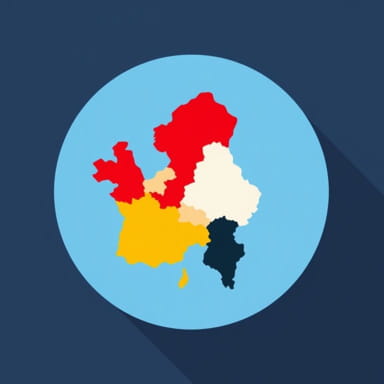
The Benelux countries are a trio of neighboring nations in Western Europe known for their close political and economic cooperation. The term Benelux is a blend of the first syllables of Belgium, the Netherlands, and Luxembourg. These three countries share historical, linguistic, cultural, and geographical ties that have shaped a lasting and unique regional partnership. While each country maintains its independence, they work together under several collaborative frameworks that influence trade, governance, and policy across Europe. Understanding the Benelux countries helps explain not only the region’s development but also its important role in the European Union and modern global affairs.
Origins and Meaning of Benelux
Historical Background
The concept of Benelux dates back to World War II, when Belgium, the Netherlands, and Luxembourg signed the Benelux Customs Union agreement in 1944 while in exile in London. This agreement laid the foundation for free trade and economic collaboration among the three nations. It came into official operation in 1948, well before the creation of the European Economic Community (EEC), making Benelux a pioneering model of regional cooperation in Europe.
Political and Economic Integration
The success of the customs union led to broader cooperation under the Benelux Economic Union, formally established in 1958. This agreement allowed for free movement of people, goods, services, and capital. The Benelux countries later became founding members of the EEC, which eventually evolved into the European Union (EU).
Member Countries of Benelux
Belgium
Belgium is a multilingual and multicultural country located at the heart of Western Europe. Its capital, Brussels, is also the de facto capital of the European Union. Belgium is divided into three main regions Flanders (Dutch-speaking), Wallonia (French-speaking), and the Brussels-Capital Region (bilingual). The country is known for its diverse population, complex political structure, and strong economy focused on services, manufacturing, and international trade.
The Netherlands
The Netherlands, often referred to as Holland, is a country known for its flat landscape, intricate canal systems, and rich cultural heritage. Amsterdam is the capital, while The Hague is the seat of the government and the home of many international organizations, including the International Court of Justice. The Netherlands is a highly developed nation with a global trading economy and a long tradition of maritime strength and agricultural innovation.
Luxembourg
Luxembourg is a small landlocked country bordered by Belgium, France, and Germany. Despite its size, it is one of the wealthiest nations in the world per capita. Luxembourg City, the capital, is a financial hub and houses important EU institutions like the European Court of Justice. The country is trilingual, with Luxembourgish, French, and German all used in official and everyday settings.
Key Features of Benelux Cooperation
Common Institutions
The Benelux countries maintain a shared institutional structure to manage cooperation. These include
- Benelux ParliamentA consultative body that brings together representatives from all three countries.
- Benelux General SecretariatThe main executive institution coordinating joint activities and policies.
- Benelux Court of JusticeA legal body that ensures uniform interpretation of common legal standards.
Areas of Collaboration
Over time, Benelux cooperation has expanded beyond economic matters. It now covers
- Cross-border transportation and infrastructure
- Security and police cooperation
- Climate and energy policies
- Digital innovation and technology
- Education and cultural exchange
Benelux and the European Union
Role in the EU Formation
The Benelux countries were instrumental in forming the European Union. Their early customs union served as a blueprint for broader European integration. They were founding members of the European Coal and Steel Community and the Treaty of Rome, which created the EEC in 1957.
Ongoing Influence
Even today, the Benelux nations are seen as advocates for EU cooperation and reform. They often coordinate their positions in EU meetings and initiatives, promoting unity and integration. Brussels, as the host city for major EU institutions, enhances Belgium’s and the region’s influence within the Union.
Geography and Demographics
Strategic Location
The Benelux region is strategically located in the heart of Europe, bordering Germany, France, and the North Sea. This central position has made it a hub for international transportation and trade. Its ports, especially Rotterdam and Antwerp, are among the busiest in Europe.
Population and Languages
Despite their relatively small combined area, the Benelux countries have a dense population with diverse cultural backgrounds. Languages spoken in the region include
- Dutch in the Netherlands and Flanders (Belgium)
- French in Wallonia and parts of Luxembourg
- German in eastern Belgium and Luxembourg
- Luxembourgish in Luxembourg
Economic Strength of Benelux
Trade and Industry
The Benelux region is an economic powerhouse in Europe. All three countries have open, export-driven economies with strong industries in logistics, finance, manufacturing, and agriculture. The Port of Rotterdam in the Netherlands is Europe’s largest port, serving as a critical gateway for goods entering and leaving the continent.
Innovation and Development
The Benelux countries invest heavily in education, research, and digital technologies. Their universities and research institutions rank among the best in the world. Governments in the region support innovation through policy frameworks and funding, making Benelux a leader in sectors like green energy, artificial intelligence, and health sciences.
Tourism and Cultural Exchange
Popular Destinations
The Benelux countries are attractive destinations for tourists due to their historical cities, scenic countryside, and vibrant cultural scenes. Notable destinations include
- Bruges and Brussels in Belgium
- Amsterdam and Utrecht in the Netherlands
- Luxembourg City and Vianden in Luxembourg
Shared Cultural Events
The region hosts many international events, festivals, and exhibitions that draw participants from across Europe and the world. These activities foster cultural exchange and highlight the artistic contributions of each country.
Challenges and Future Outlook
Adapting to Global Changes
Like many parts of the world, the Benelux countries face challenges such as climate change, digital transformation, and social integration. Working together allows them to develop shared strategies and pool resources to address these complex issues more effectively.
Strengthening Regional Unity
There is growing interest in deepening Benelux cooperation to improve competitiveness and resilience. Future goals include enhancing cross-border mobility, increasing digital infrastructure, and aligning environmental policies.
The Benelux countries Belgium, the Netherlands, and Luxembourg are united by geography, history, and shared values. Their long-standing cooperation has not only benefited their citizens but has also served as a model for regional integration around the world. Today, they continue to play a vital role in the European Union and global affairs. Understanding the structure and purpose of the Benelux alliance reveals how small nations can work together to achieve greater influence, stability, and prosperity.