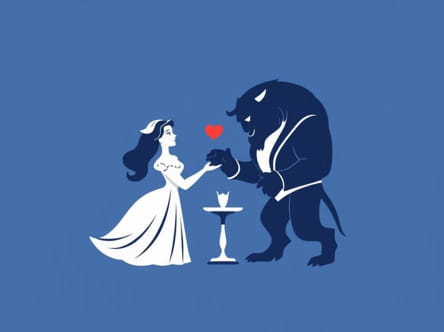
The tale of Beauty and the Beast” has captivated generations with its blend of fantasy, moral lesson, and romance. At its heart lies a story of transformation not just physical but emotional and spiritual. More than just a fairy tale, it serves as a cultural narrative that explores human values, perceptions, and the potential for change. This timeless story, though wrapped in fantasy, touches deeply on real human experiences, from prejudice to redemption, from fear to love. Across cultures and centuries, its message remains relevant, making it one of the most powerful and enduring stories ever told.
Origins of the Tale
The earliest known version of “Beauty and the Beast” is credited to French novelist Gabrielle-Suzanne Barbot de Villeneuve, written in 1740. Later abridged and made more popular by Jeanne-Marie Leprince de Beaumont in 1756, the story quickly spread through Europe. Many believe it was influenced by ancient folklore and mythologies, particularly Cupid and Psyche. This enduring narrative is often classified under the animal bridegroom trope in folklore studies.
Core Elements of the Story
At its essence, “Beauty and the Beast” tells the story of a young woman named Beauty who, through a series of events, ends up living in a magical castle with a terrifying Beast. Despite his appearance, she discovers kindness and intelligence within him, ultimately falling in love and breaking a transformative curse. Key elements include
- The selfless act of the father who picks the enchanted rose
- The enchanted castle and the mysterious Beast
- The themes of sacrifice and redemption
- The final transformation and happy ending
The Beauty Symbol of Inner Strength
Beauty is not merely a character defined by her physical attractiveness. Her name may suggest external beauty, but her defining trait is her compassion, wisdom, and courage. She chooses to go to the Beast’s castle in place of her father, showing self-sacrifice. Her gradual shift from fear to affection reflects emotional maturity and deep empathy. Her character challenges the stereotype of passive fairy-tale heroines, making her a model of integrity and emotional resilience.
The Beast Beyond the Monstrous Appearance
The Beast, originally a cursed prince, represents the struggle between appearance and reality. While he appears frightening, his actions are consistently noble and respectful. He treats Beauty with kindness, never forcing her love, and allows her freedom of choice. His character arc is a journey of inner transformation, shaped by vulnerability and humility. His monstrous form symbolizes the societal tendency to judge based on outward appearances, and his ultimate redemption mirrors the theme of inner beauty triumphing over external form.
Magic as a Narrative Device
Magic plays a central role in the story, not just through the enchanted castle and transformation curse, but also as a metaphor for emotional change. The enchanted mirrors, invisible servants, and magical elements serve as manifestations of the characters’ emotional landscapes. The curse on the Beast, which can only be broken through genuine love, underscores the idea that love cannot be forced or faked it must be earned and freely given.
Moral and Philosophical Lessons
One of the reasons “Beauty and the Beast” continues to resonate is the moral framework it presents. There are several valuable lessons embedded within the story
- Don’t judge by appearancesBeauty learns that kindness and love are more important than looks.
- True love is selflessThe Beast’s willingness to let Beauty go proves his love is genuine.
- Redemption is possibleThe Beast, through remorse and change, becomes worthy of love again.
- Family loyalty mattersBeauty’s actions are driven by love and duty toward her family.
Modern Interpretations and Adaptations
Over the years, “Beauty and the Beast” has been adapted in numerous forms from literature and theater to television and film. Perhaps the most famous adaptation is Disney’s 1991 animated film, which introduced the story to a new generation. This version added musical elements, animated objects, and a more developed backstory for both main characters. It was later remade into a live-action film in 2017, further emphasizing the importance of personal choice and mutual respect in relationships.
Feminist Readings and Criticisms
Some modern interpretations of “Beauty and the Beast” examine the story through a feminist lens. Critics have explored whether the narrative reinforces the idea that women must endure and fix broken men. Others argue that Beauty’s autonomy and choices throughout the story depict her as an empowered figure. Rather than a tale of submission, it can be seen as a narrative of emotional intelligence and transformative love. The balance between critique and celebration makes this story an ongoing topic of academic and cultural discussion.
Cultural Variations Around the World
The themes of “Beauty and the Beast” can be found in many cultures, with variations that reflect local traditions and values. In East Asian stories like “The Tale of the Bamboo Cutter” or Chinese The Princess and the Beast, the motifs of transformation and moral testing remain central. African, Native American, and Middle Eastern tales also contain similar story arcs involving cursed figures redeemed by the love and kindness of others. This universality shows that the core ideas transcend geography and time, reinforcing the story’s global relevance.
Psychological Symbolism
From a psychological perspective, “Beauty and the Beast” can be interpreted as an allegory of integration particularly through Carl Jung’s theory of the anima and animus. Beauty represents the conscious self confronting and eventually accepting the shadow, personified by the Beast. This inner acceptance leads to wholeness and transformation. The castle, isolation, and enchantment mirror the subconscious space where such integration occurs, making the story a rich subject for psychological analysis.
Why the Tale Endures
What keeps “Beauty and the Beast” relevant is its emotional and thematic depth. It’s more than a romance it’s a meditation on empathy, change, and identity. The story challenges us to look beyond superficiality, appreciate the complexities of others, and believe in the power of personal growth. It teaches that love involves recognizing the best in others and nurturing it, even when hidden beneath layers of fear or pain.
“Beauty and the Beast” remains one of the most iconic fairy tales not because of its fantasy alone, but because it speaks to truths deeply embedded in the human experience. Whether approached as folklore, literature, or philosophy, the story invites reflection and conversation. Its lessons about love, courage, and acceptance are timeless, ensuring that it continues to inspire, challenge, and enchant audiences for generations to come.