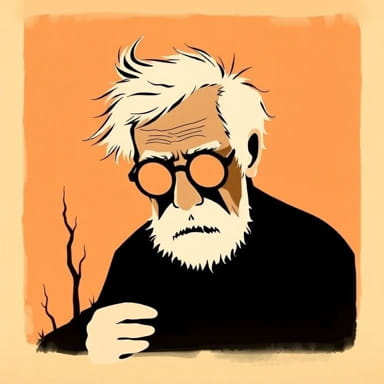
In the vast landscape of 20th-century American literature, two names consistently stand out for their thought-provoking stories, sharp social commentary, and imaginative approaches to storytelling Ray Bradbury and Kurt Vonnegut. Though their styles and tones differ greatly, both authors challenged readers to question the world around them, often through the lens of speculative fiction. Their legacies remain deeply influential, resonating with readers, writers, and critics alike who seek meaning in a rapidly changing world. Exploring their lives, works, and philosophies offers a fascinating look into how fiction can illuminate truth, inspire thought, and provoke change.
Early Life and Influences
Ray Bradbury The Dreamer from Illinois
Ray Bradbury was born in 1920 in Waukegan, Illinois. From a young age, he was drawn to stories of fantasy, horror, and science fiction, with Edgar Allan Poe, Jules Verne, and H.G. Wells leaving a strong impression on his imaginative mind. Bradbury began writing in his teens and never stopped. He often described himself as a passionate dreamer, someone who wrote not for fame but for the pure joy of storytelling. Bradbury’s childhood in the Midwest greatly influenced his tone, infusing his work with a nostalgic warmth, even when addressing dystopian themes.
Kurt Vonnegut The Satirist from Indianapolis
Kurt Vonnegut, born in 1922 in Indianapolis, Indiana, also drew on his upbringing to fuel his writing. Unlike Bradbury’s romanticism, Vonnegut’s voice was marked by irony, dark humor, and a biting wit. He served in World War II and survived the bombing of Dresden, a traumatic experience that deeply shaped his most famous novel,Slaughterhouse-Five. Vonnegut’s influences included Mark Twain and George Orwell, blending satire with science fiction to critique American society, war, and human folly.
Signature Works and Themes
Ray Bradbury’s Visionary Fiction
Bradbury’s best-known work,Fahrenheit 451, explores a dystopian future where books are banned, and critical thinking is discouraged. It is not just a warning against censorship, but also a meditation on technology, conformity, and the loss of human connection. Bradbury’s other collections, such asThe Martian ChroniclesandSomething Wicked This Way Comes, demonstrate his range from speculative science fiction to dark fantasy rooted in small-town America.
- Fahrenheit 451– A powerful critique of censorship and anti-intellectualism.
- The Martian Chronicles– A poetic vision of colonizing Mars, rich in human emotion and irony.
- Dandelion Wine– A semi-autobiographical tale of childhood and memory.
Kurt Vonnegut’s Satirical Edge
Vonnegut’s works often blended absurdity with bleak realism.Slaughterhouse-Fivecombines time travel, alien abduction, and reflections on war, making it one of the most unique anti-war novels ever written. His novelCat’s Cradleskewers blind faith in science, whileBreakfast of Championsbreaks narrative conventions and challenges readers’ understanding of fiction itself. Vonnegut was never afraid to point out the contradictions in modern life, even if doing so meant alienating some of his audience.
- Slaughterhouse-Five– A nonlinear narrative about war, trauma, and the illusion of free will.
- Cat’s Cradle– A biting commentary on religion, science, and existential meaning.
- Mother Night– A novel exploring identity and moral ambiguity in the context of WWII.
Style and Tone
Bradbury’s Lyrical Approach
Bradbury wrote with poetic flair. His prose often reads like music, filled with metaphor, rhythm, and emotional resonance. While he frequently used science fiction as a setting, his real focus was on the human heart our fears, joys, regrets, and dreams. Unlike hard science fiction authors, Bradbury admitted to knowing little about science and more about people. His work appeals to readers who appreciate literature that feels timeless and rich in emotion.
Vonnegut’s Ironic Detachment
Vonnegut’s tone was sarcastic, minimalist, and philosophical. He often employed short sentences, simple vocabulary, and conversational language. He would break the fourth wall or insert himself into his stories, reminding readers that fiction is a tool for examining truth. His catchphrase So it goes became emblematic of his worldview a resigned acceptance of death, absurdity, and the unpredictability of life.
Shared Concerns and Distinct Philosophies
While Bradbury and Vonnegut differed in tone and style, they shared a deep concern for the human condition. Both were critical of unchecked technology, dehumanization, and societal apathy. Bradbury feared a world where people no longer read or think; Vonnegut feared a world that blindly followed authority and embraced war. Despite their pessimistic warnings, each author believed in the potential for goodness and redemption.
Bradbury viewed literature as a means of preserving beauty and individuality. He celebrated imagination as a vital human force. Vonnegut, meanwhile, used literature to shine a light on hypocrisy, often asking readers to laugh, even as they confront horrifying truths. He famously advised We are what we pretend to be, so we must be careful about what we pretend to be.
Legacy and Cultural Impact
Bradbury’s Enduring Influence
Bradbury’s works are often assigned in schools and celebrated for their accessibility and emotional depth. His imagination inspired countless filmmakers, authors, and artists. He was also a passionate advocate for public libraries and literacy. Bradbury helped establish science fiction as a legitimate literary genre, earning awards like the National Medal of Arts and a Pulitzer citation for his contributions.
Vonnegut’s Cultural Relevance
Vonnegut became a cult figure among readers disillusioned by politics, war, and conformity. His blend of humor and cynicism continues to resonate with younger generations, especially in a world where absurdity often feels like reality. Vonnegut’s work is studied not just as fiction but as a philosophical framework for understanding postmodern life. He remains one of the most quoted writers of the modern era.
Two Giants of Thoughtful Fiction
Ray Bradbury and Kurt Vonnegut approached fiction in vastly different ways one with wonder, the other with wit but both left behind rich, enduring legacies that continue to challenge, inspire, and captivate readers. They used science fiction not as a means of escape, but as a mirror to our deepest truths and fears. Through their stories, they ask us not only what kind of future we might inhabit, but what kind of people we choose to be. Whether it’s Bradbury’s burning books or Vonnegut’s time-traveling soldier, the questions they raise are as urgent today as ever.