Jorge Luis Borges, a master of metaphysical fiction and literary puzzles, often challenged readers with deeply symbolic and intellectually layered narratives. One of the most striking examples of this is found in his story The Immortal, where he introduces a strange, silent, and seemingly inhuman character known only as the troglodyte. The figure of the troglodyte is not simply a creature of myth or primitive existence it is a complex philosophical symbol that speaks to the nature of identity, immortality, and the limitations of human understanding. To fully appreciate the role of the troglodyte in Borges’ narrative, we must examine its literary significance, philosophical undertones, and its connection to broader themes within the story and Borges’ body of work.
The Setting and Emergence of the Troglodyte
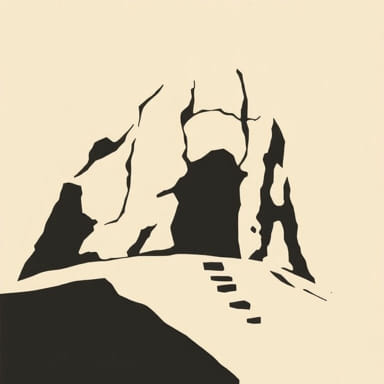
In The Immortal, Borges begins with an explorer, Marcus Flaminius Rufus, who embarks on a perilous journey in search of the City of the Immortals. When he reaches the desolate outskirts of the city, he encounters the troglodytes mute, disheveled beings who appear to live without reason, speech, or civilization. Among them, one troglodyte stands out. Though he seems indistinguishable from the others, he shows signs of recognition and awareness that hint at a deeper consciousness.
Physical Description and Behavior
Borges describes the troglodyte as filthy, skeletal, and naked, exhibiting no response to questions or stimuli. His silence is unnerving. He neither defends himself nor expresses emotion. However, as time progresses, Rufus notices subtle changes. The creature listens, mimics human behaviors, and eventually, in an astonishing revelation, reveals himself to be none other than Homer the legendary poet of ancient Greece. This twist unravels the narrative and invites readers to reinterpret the significance of immortality, memory, and identity.
The Troglodyte as a Metaphor for Immortality
The concept of the troglodyte serves as Borges’ vehicle for exploring the consequences of immortality. In becoming immortal, the poet Homer (now a troglodyte) loses the defining characteristics that made him human. He loses his identity, language, passion, and creativity. Immortality, rather than being a gift, is depicted as a curse. The endlessness of life dulls experience and makes all human actions seem meaningless. This transformation is not unique to Homer Borges suggests that any being subjected to eternity would eventually lose all individuality.
- Loss of PurposeOver time, the infinite repetition of experiences renders all pursuits trivial.
- Decay of IdentityWithout death to define life, even great figures like Homer forget who they were.
- Emptiness of Eternal KnowledgeKnowing everything means that nothing is new, and thus, nothing is valuable.
Philosophical Themes Embedded in the Troglodyte
Borges was heavily influenced by philosophical concepts, especially those related to time, identity, and epistemology. The troglodyte embodies several key ideas that resonate with ancient and modern philosophical discourse.
Self and Consciousness
The transition from Homer to troglodyte is not just physical but also cognitive. Borges implies that the mind, when unanchored by mortality, dissolves into incoherence. The question arises what makes a person themselves? Is it memory, action, creativity, or the awareness of mortality? Borges plays with the idea that selfhood requires a beginning and an end. Without death, there is no contrast against which to measure life.
Language and Meaning
The silence of the troglodyte is significant. Language is one of the primary tools through which humans make sense of the world and communicate identity. When Homer becomes mute, it is not because he is incapable of speech but because words have lost their meaning to him. Over centuries, the richness of language and metaphor becomes redundant. Thus, the troglodyte’s muteness is symbolic of the futility of language in the face of eternity.
Historical Irony
The choice of Homer as the character who becomes the troglodyte is deeply ironic. Homer, whose poetry immortalized heroes, becomes a living symbol of the failure of immortality. The irony that the man who gave voice to Achilles and Odysseus now lives in silence and anonymity highlights Borges’ critique of eternal fame and literary permanence. Even the most celebrated voices of human history, given enough time, will fade into oblivion if removed from the bounds of mortality.
The Troglodyte and the Structure of the Story
Borges structures The Immortal in such a way that the identity of the troglodyte becomes a pivotal revelation. This delayed recognition invites readers to reflect on their assumptions about progress, history, and personality. The transformation from perceived savage to ancient poet undermines the notion that external appearances or behavior necessarily reflect inner truth. Borges masterfully uses the troglodyte to disrupt linear thinking and challenge the reader’s comfort with surface-level interpretations.
Symbolic Geography
The City of the Immortals itself is a labyrinth another recurring Borges motif. It represents not only physical confusion but also intellectual and existential disorientation. The city is filled with inverted architecture staircases that lead nowhere, buildings that defy logic. It mirrors the chaotic effect of immortality on the mind. Within this confusing city, the troglodytes live as remnants of once-great thinkers, now reduced to hollow shadows of themselves. The setting reinforces the troglodyte’s symbolic role as a relic of lost identity and meaning.
The Troglodyte and Borges’ Literary Style
In typical Borges fashion, the narrative is rich with intertextuality, metaphysical speculation, and unreliable narration. The story of the troglodyte may be interpreted as a dream, a metaphor, or even a fable. Borges blurs the line between fact and fiction, asking readers to question the nature of reality. The troglodyte is not just a character; he is a reflection of Borges’ larger inquiry into the boundaries of knowledge and the illusions of permanence.
- Intertextual ReferencesHomer, Virgil, ancient myths, and classical literature form the foundation of the story’s depth.
- MetafictionBorges includes fictional editors and manuscripts, further complicating the truth of the tale.
- Conceptual PuzzlesThe narrative invites philosophical debates about time, identity, and the self.
The Troglodyte as a Cautionary Figure
In the end, Borges’ troglodyte is a cautionary figure one who warns against the seductive allure of eternal life and unbounded knowledge. Through him, Borges dismantles romantic notions of immortality and questions the sustainability of personal identity across infinite time. The troglodyte forces us to consider what truly defines a human being is it our memories, our words, our mortality, or something else entirely?
The power of Borges’ writing lies in its ability to turn speculative fiction into a philosophical mirror. The troglodyte may appear grotesque and silent, but within him lies a profound commentary on the human condition. He is both a symbol and a warning one that continues to challenge readers long after the story ends.