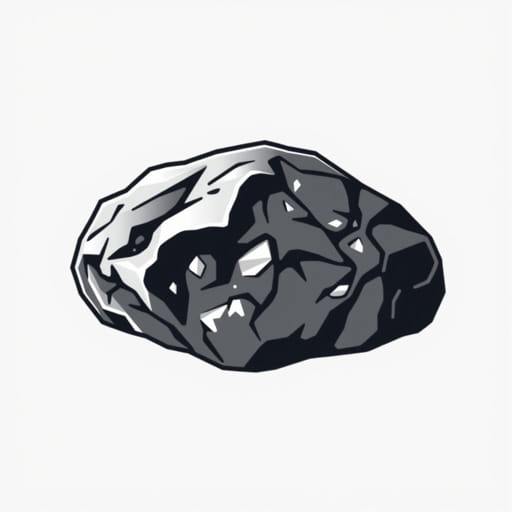
Basalt is one of the most common igneous rocks found on Earth, forming vast plateaus and volcanic landscapes across continents and ocean floors. Many people who encounter basalt wonder about its internal structure, particularly whether it contains crystals. Understanding the crystalline nature of basalt involves examining its formation, cooling process, mineral composition, and texture. Although basalt appears dense and dark, it can indeed contain crystals, and these crystals offer important insights into the geological history of the rock and the conditions under which it formed.
Formation of Basalt
Basalt forms from the rapid cooling of lava at or near the Earth’s surface. When molten rock, known as magma, erupts from volcanoes or fissures, it spreads out and cools quickly in contact with the atmosphere or ocean water. This rapid cooling influences the texture and crystal size of the resulting rock. Because basaltic lava cools faster than magma that solidifies deep underground, the crystals in basalt are often smaller and sometimes difficult to see with the naked eye.
Mineral Composition of Basalt
Basalt is primarily composed of mafic minerals, which are rich in magnesium and iron. The most common minerals found in basalt include
- Plagioclase FeldsparThis is the most abundant mineral in basalt and can form small, blocky crystals.
- PyroxeneTypically forms dark, elongated crystals within the basalt.
- OlivineCan occur as small, greenish crystals, particularly in basalt derived from mantle sources.
- Accessory MineralsSometimes basalt contains small amounts of magnetite, ilmenite, or other minor minerals that may crystallize as the lava cools.
Crystal Formation in Basalt
Crystals in basalt form as the molten lava cools and the minerals begin to solidify. The speed of cooling greatly influences the size of the crystals
- Rapid CoolingWhen lava cools very quickly on the surface, it produces fine-grained or aphanitic basalt. The crystals are so small that they are often microscopic.
- Slow CoolingIf some of the lava cools more slowly, such as in thicker flows or underground, larger crystals can form. This results in a porphyritic texture, where small crystals are embedded in a finer-grained matrix.
Porphyritic Texture
A common feature in many basalts is the porphyritic texture. In this structure, larger crystals known as phenocrysts form first while the lava is still molten underground. When the lava erupts and cools rapidly, the remaining melt solidifies quickly, creating a fine-grained groundmass around the phenocrysts. The presence of these crystals provides geologists with valuable clues about the cooling history and the depth of magma formation.
Identifying Crystals in Basalt
Crystals in basalt can be challenging to identify without magnification because many are very small. However, geologists use several techniques to examine them
- Hand Lens or MicroscopeA hand lens can reveal slightly larger crystals, while a petrographic microscope allows detailed observation of crystal shape and mineral composition.
- Thin SectionsSmall slices of basalt are polished and examined under a microscope using polarized light, which highlights individual mineral crystals.
- Geochemical AnalysisTechniques such as X-ray diffraction can determine the exact mineral content and confirm the crystalline nature of basalt.
Common Crystalline Features in Basalt
Even when small, crystals in basalt often display distinct characteristics
- Color VariationsPyroxene crystals appear dark green to black, olivine can be green, and feldspar is usually light-colored.
- ShapeCrystals often exhibit blocky or elongated shapes depending on the mineral type.
- DistributionIn porphyritic basalts, crystals are scattered throughout the finer-grained matrix, providing a textured appearance.
Basalt vs. Other Igneous Rocks
Comparing basalt to other igneous rocks helps clarify its crystalline nature. Granite, for example, forms from magma that cools slowly deep underground, resulting in large, easily visible crystals. In contrast, basalt’s rapid cooling at the surface generally produces smaller crystals. Despite this difference, both rocks are crystalline, meaning their minerals have a regular internal arrangement that classifies them as igneous.
Extrusive vs. Intrusive Rocks
Basalt is an extrusive igneous rock because it forms from lava that erupts and solidifies at the surface. The rapid cooling characteristic of extrusive rocks limits crystal growth. Intrusive rocks, like gabbro, are chemically similar to basalt but form underground, cooling slowly to allow larger crystals to develop. This comparison highlights that crystal formation is a function of cooling rate rather than composition alone.
Significance of Crystals in Basalt
The presence of crystals in basalt has important scientific and practical implications
- Geological HistoryCrystals provide clues about the depth, temperature, and cooling rate of the magma before eruption.
- Petrological StudiesStudying the type and arrangement of crystals helps identify different basaltic formations and volcanic activity patterns.
- Industrial UsesUnderstanding the crystal structure of basalt is essential in industries where basalt is used for construction, insulation, and fiber production.
Basalt in Everyday Life
Basalt is used in construction as crushed stone, road base, and building blocks. It is also transformed into basalt fiber for insulation and reinforcement. The crystalline nature affects its hardness and durability, making it a reliable material for many applications. Even in decorative stone applications, the small crystals can give basalt a speckled appearance that adds aesthetic appeal.
basalt does have crystals, though their size and visibility depend on the cooling conditions during formation. Rapidly cooled basalt generally has very small, fine-grained crystals, while slower cooling can produce larger phenocrysts in a porphyritic texture. The mineral composition, including plagioclase feldspar, pyroxene, and olivine, contributes to the rock’s crystalline structure and physical properties. Understanding the crystalline nature of basalt not only enhances our appreciation of this ubiquitous rock but also provides essential information for geologists, engineers, and anyone interested in Earth sciences. From its geological formation to practical applications, the crystals within basalt reveal both its history and functionality in our world.