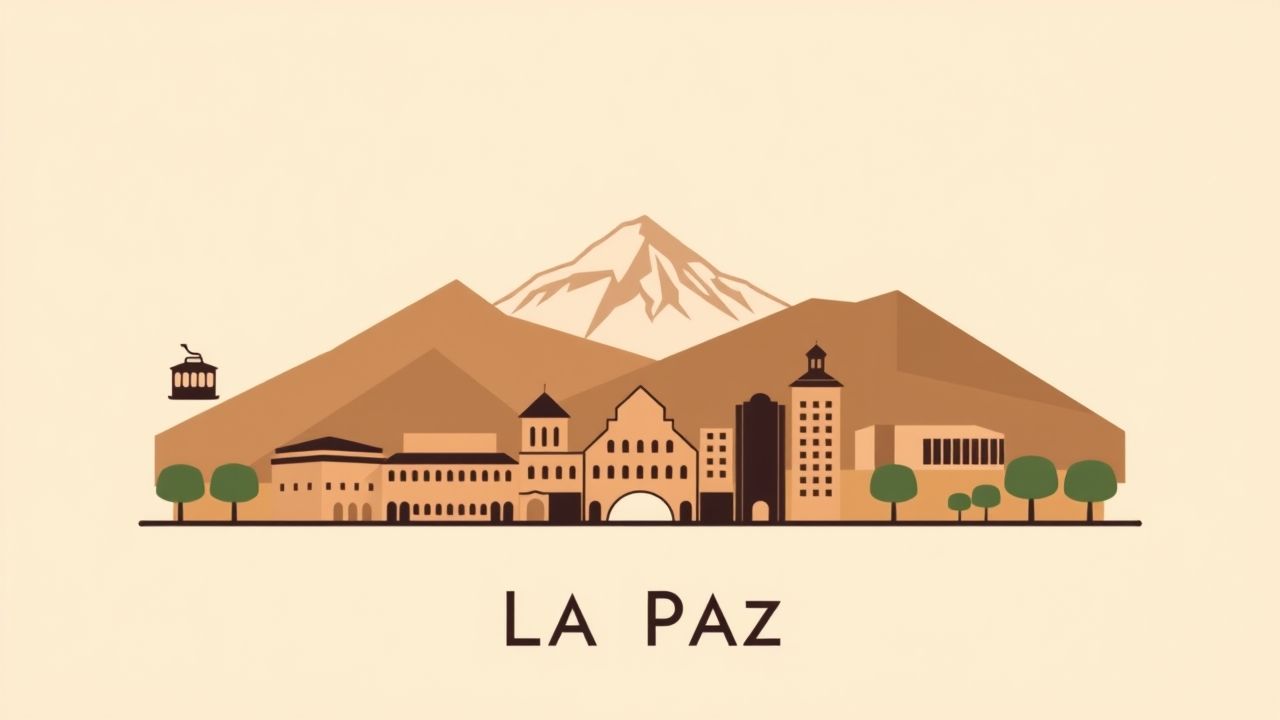
La Paz, Bolivia, is one of the most captivating cities in South America, not only because of its dramatic altitude but also because of its unique cultural and political significance. Set high in the Andes mountains, La Paz is a place where tradition and modernity coexist. Its winding streets, vibrant markets, and stunning natural surroundings create a one-of-a-kind urban landscape. For travelers, historians, and anyone curious about Bolivian identity, La Paz stands as a dynamic symbol of the country’s past, present, and future.
Geographic Setting of La Paz
High Altitude City
La Paz is famously known as the highest administrative capital in the world. Sitting at approximately 3,650 meters (11,975 feet) above sea level, it stretches across a deep valley surrounded by snow-capped mountains. This altitude gives La Paz cooler weather throughout the year and contributes to its remarkable views and distinct atmosphere.
El Alto Connection
Adjacent to La Paz is El Alto, a rapidly growing city on the high plateau. Together, they form one of the most significant urban zones in Bolivia. El Alto sits even higher than La Paz and serves as a key economic and cultural partner. The two cities are connected by an impressive cable car system known as Mi Teleférico, offering stunning panoramic views.
Political and Administrative Role
Capital Status
Though Sucre is Bolivia’s constitutional capital, La Paz holds the executive and legislative branches of the government. It is where the presidential palace and congress are located, making it the de facto political center of the nation. This dual-capital arrangement is unique and reflects Bolivia’s layered historical development.
Government Institutions
La Paz is home to numerous government ministries, international organizations, and diplomatic missions. Its status as the seat of government gives it a central role in Bolivia’s political discourse and administrative operations.
Cultural Identity and Heritage
Indigenous Influence
La Paz is a city with deep indigenous roots. The Aymara people, among the most prominent indigenous groups in Bolivia, form a significant portion of the population. Traditional clothing, languages, and rituals are commonly observed, especially in neighborhoods and markets.
Witches’ Market and Tradition
One of the most unique attractions in La Paz is the Witches’ Market (Mercado de las Brujas). Here, vendors sell herbs, dried animals, amulets, and potions believed to bring health, fortune, or protection. This blend of indigenous spiritual practices and modern commerce reflects the rich tapestry of beliefs in the region.
Festivals and Celebrations
La Paz celebrates a variety of festivals that blend Catholic traditions with indigenous customs. Among the most famous is the Gran Poder Festival, where dancers in elaborate costumes parade through the streets in honor of the Lord of Great Power. Music, dance, and devotion come together in a vibrant expression of Bolivian identity.
Economic Importance
Commerce and Trade
La Paz serves as a commercial hub for western Bolivia. Its markets are full of locally produced textiles, food, and handicrafts. El Alto, in particular, hosts one of the largest open-air markets in Latin America, attracting traders from across the region.
Tourism Industry
Tourism is a growing part of La Paz’s economy. The city’s unique topography, cultural heritage, and proximity to natural wonders like Lake Titicaca and the Yungas Road attract visitors from around the world. Tour operators offer everything from historical city tours to adrenaline-pumping biking excursions.
Educational and Scientific Centers
Major Universities
La Paz is home to some of Bolivia’s top educational institutions, such as the Universidad Mayor de San Andrés (UMSA). These universities play a critical role in shaping Bolivia’s future by fostering local talent and academic research.
Scientific Contributions
Because of its high altitude and unique environment, La Paz has also been a point of interest for scientific research, particularly in the areas of health, ecology, and anthropology.
Transportation and Infrastructure
Mi Teleférico The Urban Cable Car
La Paz’s most innovative transport system is Mi Teleférico, an extensive network of cable cars that connects different parts of the city and neighboring El Alto. It is both a solution to traffic congestion and a model of sustainable urban planning.
Access and Connectivity
La Paz is accessible via El Alto International Airport, one of the highest airports in the world. Despite the challenging terrain, road systems connect La Paz to major Bolivian cities and international borders.
Challenges and Resilience
Urban Sprawl
Due to population growth and topographic constraints, urban sprawl has become a challenge. Informal settlements are common, especially on steep hillsides, where building is risky yet necessary due to housing demand.
Environmental Concerns
Climate change and pollution are growing issues. The high altitude makes air quality a concern, and water scarcity affects some communities. The city government has taken steps toward better environmental management, but more work remains.
Notable Places to Visit
- Plaza MurilloThe political heart of La Paz, surrounded by government buildings
- Valle de la Luna (Moon Valley)A surreal landscape of eroded rock formations
- Calle JaénA colonial-era street with preserved architecture and small museums
- Chacaltaya GlacierFormer ski resort and observation point, now highlighting climate change
- San Francisco ChurchA beautiful baroque-style church that blends Catholic and indigenous elements
La Paz, Bolivia, is not just a city in the mountains it is a living, breathing example of how history, culture, geography, and politics intertwine. With its mix of indigenous tradition and modern innovation, La Paz holds a mirror to Bolivia’s diverse identity. Whether you’re drawn to its stunning landscapes, cultural richness, or political importance, La Paz remains one of South America’s most unforgettable destinations. As Bolivia continues to evolve, La Paz stands at its heart, embracing both the challenges and opportunities that lie ahead.