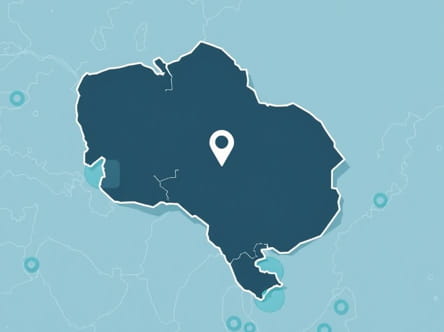
Omsk is a significant city in Russia, yet many people are unfamiliar with exactly where it lies on the map. As one of the largest cities in Siberia, Omsk holds historical, cultural, and logistical importance in this vast and remote region. Its geographical location plays a major role in its development, character, and economic contribution to Russia. Understanding where Omsk is located helps to appreciate its position not just within Siberia, but in the broader Russian and Eurasian context.
Geographic Location of Omsk
Where Is Omsk in Russia?
Omsk is located in southwestern Siberia, a region that spans much of northern Asia. More specifically, Omsk lies in the southern part of the West Siberian Plain, close to the border with Kazakhstan. On a political map of Russia, it is situated toward the eastern side of European Russia and near the western edge of central Siberia. The city sits along the Irtysh River, which flows northward from China and Kazakhstan through Siberia.
Latitude and Longitude Coordinates
If you are using a GPS device or a digital map, the exact coordinates of Omsk are approximately
- Latitude 54.9885° N
- Longitude 73.3242° E
These coordinates place Omsk well into the Asian part of Russia, a long distance east of Moscow, Russia’s capital. It is part of the Omsk Oblast (region), for which it also serves as the administrative center.
Proximity to Other Major Cities
Distance from Moscow and Saint Petersburg
To understand Omsk’s location more clearly, it’s helpful to compare it to cities most people know
- Moscow approximately 2,700 kilometers (1,680 miles) to the west
- Saint Petersburg about 3,000 kilometers (1,860 miles) to the northwest
This great distance illustrates how expansive Russia is and highlights the geographic isolation common in Siberian cities. Despite its remote setting, Omsk is a well-developed urban center and plays an important role in the region.
Nearby Cities and Borders
Omsk is much closer to cities like
- Novosibirsk – around 600 kilometers (373 miles) to the east
- Tyumen – roughly 600 kilometers to the west
- Pavlodar, Kazakhstan – approximately 400 kilometers to the south
These distances show that while Omsk is far from Moscow, it is connected to a network of cities in western Siberia and even close to the northern borders of Kazakhstan. This geographic placement enhances its role in trade, especially with Central Asia.
Omsk’s Role in the Trans-Siberian Railway
A Stop Along a Major Transportation Route
Omsk is a key city on the famous Trans-Siberian Railway, one of the longest railway lines in the world. This railway stretches from Moscow all the way to Vladivostok on the Pacific Ocean. Omsk’s location along this route makes it a significant stop for passengers and cargo moving across the country. This transportation link enhances the city’s economic role and accessibility.
Road and River Connections
In addition to the railway, Omsk is accessible via federal highways and lies on the Irtysh River. Although river transport is less prominent today than in the past, the river was historically vital for shipping goods. Today, road transport supports most of the local and regional movement of people and products.
Physical Geography and Climate
Surrounding Landscape
Omsk is located on the flat West Siberian Plain, which is characterized by wide open grasslands and forests. The terrain around the city is mostly flat, with fertile soils suitable for agriculture. This makes the Omsk region one of the more agriculturally productive parts of Siberia.
Climate and Elevation
Omsk has a continental climate, which means cold winters and warm summers. Snow can cover the city from November to March, while summer temperatures can exceed 30°C (86°F). The elevation is about 87 meters (285 feet) above sea level, typical for cities in the West Siberian Plain.
Map Features to Identify Omsk
How to Spot Omsk on a Map
When looking at a map of Russia, you can identify Omsk by tracing along the Irtysh River in southwestern Siberia. The city will typically be labeled due to its size and administrative importance. On satellite maps, you can see its rectangular urban layout, major roads, and bridges crossing the river.
Landmarks and Orientation
Some map features that help identify Omsk include
- The Irtysh River – flowing through the center of the city
- Omsk Airport (Tsentralny Airport) – located on the city’s eastern edge
- Large industrial zones to the north and east of the city center
- Green urban parks and sports complexes scattered within the city grid
Economic Importance of Omsk’s Location
Industrial and Agricultural Hub
Because of its central location in Siberia and its position along major transport routes, Omsk has developed as a hub for industry and agriculture. It is home to oil refineries, machinery factories, and food production plants. The surrounding region supports grain farming and livestock, which are processed and distributed from Omsk.
Strategic Position in Western Siberia
Omsk serves as a strategic location for economic activity in western Siberia. Its relative proximity to Kazakhstan and other Central Asian countries makes it a gateway for trade. Additionally, military and aerospace industries have a presence in the city, reinforcing its strategic importance in the region.
Cultural and Historical Geography
Historic City with a Strategic Role
Omsk was founded in 1716 as a fortress to defend Russia’s expanding eastern borders. Over time, it grew into a trading post and administrative center. During the Russian Civil War, Omsk even served briefly as the capital of anti-Bolshevik forces. These events added to the city’s historical and geopolitical value.
Urban Structure and Growth
The city has grown in a structured grid pattern, with newer residential areas developing on the outskirts. Cultural landmarks such as cathedrals, museums, and theaters are found in the historical city center. The urban landscape combines Soviet-era architecture with modern buildings and green spaces.
Omsk is a major Siberian city located in southwestern Russia along the Irtysh River. Its position on the West Siberian Plain, its location on the Trans-Siberian Railway, and its proximity to the Kazakhstan border make it a vital hub for transportation, industry, and culture in this part of the world. On a map, Omsk is best found by looking east of the Ural Mountains and southeast of Novosibirsk. Recognizing Omsk’s geographical location adds context to its role in Russian history, economy, and regional influence.