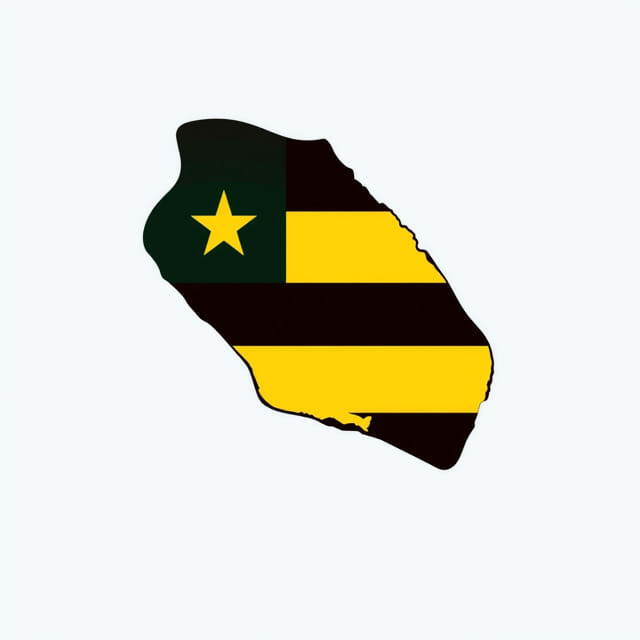
The Gambia is one of the smallest countries on the African continent, yet its unique shape and geographic position make it stand out on any map. Completely surrounded by Senegal except for its short Atlantic coastline, The Gambia stretches narrowly along the Gambia River. For anyone asking where is Gambia located,” the answer involves not only coordinates and neighboring countries but also an understanding of how geography shapes this West African nation’s identity and culture.
Geographic Location of The Gambia
Where Is The Gambia on the Map?
The Gambia is located in West Africa. It is the smallest country on mainland Africa, both in terms of area and population. The country lies between latitudes 13° and 14°N and longitudes 13° and 17°W. It is surrounded on three sides north, south, and east by Senegal, making it an almost completely enclaved country, except for a small stretch of coastline along the Atlantic Ocean to the west.
The Gambia has a distinctive geographic shape that follows the Gambia River for nearly 320 kilometers (about 200 miles) from its mouth on the Atlantic coast inland. The width of the country ranges between 24 and 48 kilometers (15 to 30 miles), giving it a long and narrow appearance on the map.
Bordering Countries and Bodies of Water
Understanding where Gambia is located also means looking at its natural and political boundaries. Here are some geographical facts
- Senegalborders The Gambia on all sides except the west.
- The Atlantic Oceanlies to the west, providing access to international maritime trade and fishing resources.
- The Gambia Riverflows through the entire length of the country, from east to west, and plays a critical role in transportation and agriculture.
Administrative Regions and Capital
The Capital City Banjul
The capital of The Gambia is Banjul, which is located on an island at the mouth of the Gambia River, where it meets the Atlantic Ocean. Though small in size, Banjul serves as the political and administrative center of the country. It is connected to the mainland by bridges and ferries and is surrounded by urban expansion areas such as Serrekunda and Bakau.
Administrative Divisions
The country is divided into five administrative regions and one city. These regions run parallel to the Gambia River and include
- West Coast Region– includes towns like Brikama and is home to many of the country’s urban centers.
- Lower River Region– features riverine landscapes and agricultural villages.
- Central River Region– situated in the heart of the country and known for historical sites and nature reserves.
- Upper River Region– borders Senegal to the east and has a mix of agriculture and rural settlements.
- North Bank Region– located to the north of the Gambia River, across from the capital area.
Climate and Physical Geography
Topography of The Gambia
The Gambia is generally flat with some low hills. The entire country lies within the Sahel zone, a transitional region between the Sahara Desert to the north and the lush rainforests to the south. Most of the land is savanna and grassland, with fertile floodplains near the river.
Climate Conditions
The Gambia has a tropical climate with two main seasons
- Dry season– from November to May, characterized by cooler temperatures and dry winds from the Sahara.
- Rainy season– from June to October, marked by higher humidity and heavy rainfall.
The Gambia River moderates the climate and supports agriculture, fishing, and daily life for many Gambians. Because the river is navigable, it also helps link communities that would otherwise be isolated.
Cultural and Historical Significance
A Country Defined by Its River
The name “The Gambia” comes from the Gambia River, which is the lifeblood of the nation. Historically, the river served as a key route for trade, communication, and migration. Even today, villages and towns line its banks, and ferries are a common means of transport.
The river’s importance is not just economic but also cultural. Songs, stories, and traditional rituals across different ethnic groups in The Gambia often center around the river. For centuries, it was a crucial part of the trans-Saharan and later trans-Atlantic trade routes.
Colonial Legacy and Borders
One reason The Gambia has such a narrow and specific shape is due to its colonial history. The British established control over the river and its banks during the 19th century, focusing their efforts on controlling the waterway for commerce and defense. Meanwhile, France controlled surrounding Senegal. This led to a unique boundary arrangement, with the Gambia River essentially becoming the center of a British colony within a French-dominated region. The current borders were solidified by colonial treaties and remained after The Gambia gained independence in 1965.
Importance of The Gambia’s Location
Strategic and Economic Relevance
Despite its small size, The Gambia holds strategic importance due to its river and access to the Atlantic Ocean. Its location makes it a natural port hub and a potential trade corridor for goods moving to and from inland West Africa. Banjul’s port plays a central role in the national economy, importing goods and exporting groundnuts, fish, and other products.
Tourism and Ecology
The Gambia’s coastal location, warm climate, and riverine landscape have made it a growing destination for international tourism. Visitors are drawn to its beaches, birdwatching opportunities, and cultural festivals. Eco-tourism is a major focus, with several national parks and wildlife reserves situated near the river.
- Abuko Nature Reserve– a small yet rich ecological site near the capital.
- Kiang West National Park– a larger protected area with monkeys, antelopes, and birds.
- River Gambia National Park– also known as Baboon Island, home to chimpanzees and dense forest.
To answer the question where is Gambia located, one must go beyond mere coordinates and consider the country’s geographic, cultural, and historical context. Located in West Africa and surrounded by Senegal except for its short Atlantic coastline, The Gambia stretches narrowly along the Gambia River, which has shaped nearly every aspect of life there. Its small size belies its significance as a cultural crossroads, ecological treasure, and historic river nation. Whether viewed on a map or visited in person, The Gambia stands as a testament to how geography and history intertwine to form a nation’s identity.