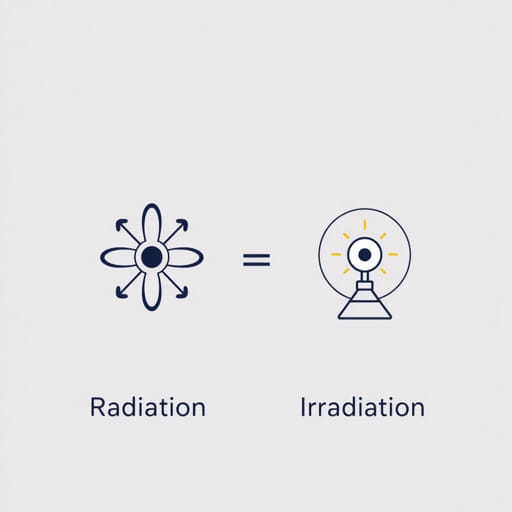
The concepts of radiation and irradiation are often used interchangeably in everyday conversations, yet in the scientific and industrial context, they hold distinct meanings. Understanding the difference between radiation and irradiation is crucial, especially in fields like physics, medicine, food processing, and environmental science. Both terms relate to the transfer and interaction of energy, but they describe different aspects of this phenomenon. Clarifying their definitions helps prevent confusion and ensures accurate communication in research and practical applications.
Understanding Radiation
Radiation refers to the emission and propagation of energy through space or a medium. This energy can take the form of electromagnetic waves, such as light, X-rays, and gamma rays, or ptopic radiation, including alpha and beta ptopics. Radiation is a natural and ubiquitous phenomenon that occurs both in everyday life and in scientific processes. For instance, sunlight is a form of electromagnetic radiation that provides energy essential for life on Earth.
Types of Radiation
- Electromagnetic RadiationThis includes visible light, ultraviolet (UV) light, X-rays, and gamma rays. These waves travel at the speed of light and do not require a medium.
- Ptopic RadiationThis involves ptopics such as alpha ptopics, beta ptopics, and neutrons, which carry energy as they move through space or materials.
- Ionizing vs Non-Ionizing RadiationIonizing radiation has enough energy to remove electrons from atoms, potentially causing chemical changes and damage to living tissues. Non-ionizing radiation, such as radio waves and microwaves, does not have enough energy to ionize atoms.
Radiation is a process that naturally occurs in the universe. Stars, including the Sun, emit radiation constantly. Radioactive materials, such as uranium or radium, also emit radiation as their unstable atomic nuclei decay. In medicine, controlled radiation is used for imaging and therapy, such as X-rays and radiotherapy.
Understanding Irradiation
Irradiation, on the other hand, is the process of exposing an object or material to radiation. It describes the effect of radiation on a substance rather than the emission of energy itself. In other words, irradiation is the action performed when a material, surface, or living tissue absorbs or is subjected to radiation. This distinction is crucial in practical applications, such as food safety, sterilization, and medical treatment.
Applications of Irradiation
- Food ProcessingFood irradiation uses controlled doses of gamma rays, X-rays, or electron beams to eliminate bacteria, parasites, and insects, extending shelf life without significantly altering taste or nutritional value.
- Medical SterilizationSurgical instruments and medical devices are often irradiated to ensure sterility, preventing infections in patients.
- Cancer TreatmentIn radiotherapy, cancerous tissues are deliberately irradiated with precise doses of radiation to destroy malignant cells while minimizing harm to surrounding healthy tissues.
- Scientific ResearchIrradiation can induce mutations in plants and microorganisms, aiding genetic research and crop improvement programs.
While radiation refers to the energy itself, irradiation emphasizes the process and impact on the material or organism being exposed. For example, sunlight is radiation, whereas placing food under ultraviolet lamps for sterilization is irradiation. The exposure dose, duration, and type of radiation used are critical factors in determining the effectiveness and safety of irradiation.
Key Differences Between Radiation and Irradiation
Understanding the differences between radiation and irradiation helps clarify their roles in science and industry. The distinctions can be summarized in several points
- DefinitionRadiation is the emission and transfer of energy in the form of waves or ptopics. Irradiation is the process of exposing an object or substance to radiation.
- FocusRadiation focuses on the energy source and its properties. Irradiation focuses on the effects of that energy on the target material.
- UsageRadiation describes a natural or artificial phenomenon. Irradiation is a deliberate action performed for specific purposes.
- ContextRadiation is a broad scientific term applicable in physics, astronomy, and biology. Irradiation is mainly used in practical applications like medicine, food preservation, and sterilization.
Examples to Illustrate the Difference
Consider sunlight, which emits ultraviolet radiation. If a farmer places fresh fruits under UV lamps to reduce microbial contamination, the fruits are being irradiated. Similarly, X-rays are radiation, but when a doctor directs an X-ray beam at a broken bone to produce an image, the patient’s tissues undergo irradiation. These examples highlight that radiation is the source, while irradiation is the action on a target.
Safety Considerations
Both radiation and irradiation require careful management due to potential health risks. Ionizing radiation, in particular, can cause cellular damage, increase cancer risk, and lead to genetic mutations if exposure is uncontrolled. Safety measures include shielding, limiting exposure time, and maintaining a safe distance from radiation sources.
- Radiation SafetyWearing protective gear, monitoring exposure, and adhering to regulatory guidelines are crucial when working near radioactive materials or medical imaging equipment.
- Irradiation SafetyEnsuring precise control over irradiation doses prevents overexposure, preserves material integrity, and safeguards human health.
Radiation and irradiation are interconnected yet distinct concepts. Radiation refers to the energy emitted as waves or ptopics, encompassing natural and artificial sources. Irradiation describes the process of exposing objects, materials, or living tissues to that energy, highlighting its effects and applications. By understanding the differences, scientists, medical professionals, and industry experts can apply these concepts accurately in fields ranging from healthcare to food safety. Awareness of their characteristics and applications also emphasizes the importance of safety measures, ensuring that the benefits of radiation and irradiation are realized without unnecessary risks. Ultimately, the distinction between radiation and irradiation is not merely academic; it has practical implications in daily life and advanced technological processes, making it essential knowledge for anyone working with or studying these phenomena.