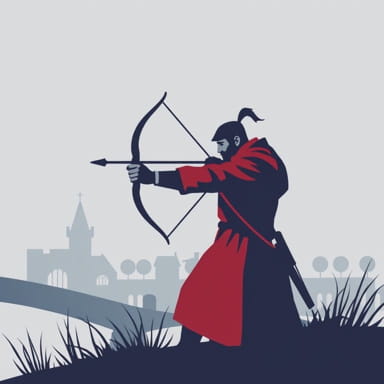
In the annals of strange laws and misunderstood legends, the supposed legality of shooting a Welshman with a crossbow within the bounds of York stands out as one of the most persistent and bizarre tales from British legal folklore. Often repeated as a curious example of ancient statutes still on the books, this myth has sparked both amusement and concern about how law and culture evolve over time. The story touches on historical tensions, outdated legal practices, and the peculiarities of common law. Understanding its origins and context reveals much about the legal history of the United Kingdom and how urban legends often distort truth.
Origins of the Myth
Medieval Tensions Between the English and Welsh
The background of this tale lies in the complex and often hostile relationship between the English crown and the Welsh people during the medieval period. Following Edward I’s conquest of Wales in the late 13th century, laws were passed to control and suppress the Welsh population. These laws restricted movement, property rights, and even where Welsh people could live or work.
One interpretation of the myth is that it stems from such laws or proclamations, which may have included temporary martial law or specific restrictions in cities like York. However, there is no surviving statute that officially permits or legalizes the killing of a Welshman under such bizarre circumstances.
York’s Historical Legal Autonomy
York, as one of England’s most important medieval cities, had certain legal privileges and charters that gave it autonomy in local governance. These special statuses may have contributed to the emergence of city-specific legends involving local laws. However, there is no evidence in York’s chartered rights to support the legality of violence against specific ethnic groups.
The Legal Landscape in Medieval England
Common Law and Customary Practices
England’s legal system evolved through common law, where decisions by judges and courts helped shape legal doctrine. Customary laws, local practices, and royal decrees all played a role in shaping the law. During times of unrest or rebellion, exceptional orders might have been issued temporarily, but these were not meant to be permanent fixtures.
The so-called ‘law’ allowing the shooting of a Welshman with a crossbow appears nowhere in the official legal record. Instead, it likely derives from misremembered or misunderstood temporary orders during periods of rebellion, such as those led by Owain Glyndŵr in the early 15th century.
Law Versus Legend
British law has always had room for quirky and outdated statutes, such as those relating to whale ownership or taxi drivers carrying hay for horses. However, many of these have either been repealed or misrepresented over time. The claim about shooting a Welshman in York with a crossbow appears to be entirely mythical, passed down orally or through humorous retellings rather than legal enforcement.
Modern Interpretations and Misunderstandings
Urban Legend and Internet Propagation
In recent years, this myth has found new life online, often featured in lists of ‘weird laws still in effect.’ It is typically cited with little to no legal evidence, relying instead on its shock value and the irony of an ancient, violent law supposedly still being valid. The idea that one could legally commit murder under such a condition is legally absurd and would never hold up in any modern court of law.
Implications for Modern Law Awareness
This myth raises important questions about legal literacy and the public’s understanding of current laws. While these tales are entertaining, they can blur the line between fiction and reality. It also highlights how folklore and selective memory can shape public discourse around law, justice, and identity.
Legal Consequences in the Present Day
Would It Be Legal Today?
Without question, shooting a Welshman or anyone with a crossbow in modern-day York would be a serious criminal offense under UK law. Laws surrounding assault, attempted murder, and murder are well-established, and there are no exceptions based on location, ethnicity, or the type of weapon used.
- The Offenses Against the Person Act 1861 criminalizes bodily harm and assault.
- Modern hate crime legislation further enhances penalties for crimes motivated by racial or national hatred.
- Ownership and use of crossbows are regulated under the Crossbows Act 1987, making it unlawful to use them for violent purposes.
Thus, any attempt to invoke a supposed ancient right to shoot a Welshman in York would not only be rejected but likely met with prosecution.
The Role of Myth in Legal Culture
Why Do These Stories Persist?
There is something inherently fascinating about the idea that laws from centuries past could still exist today, particularly if they seem unjust, outdated, or humorous. Such stories provide a sense of continuity and tradition, even when they are false. They also allow people to reflect on how far legal systems have come.
In a way, these myths serve as cautionary tales. They remind us of the danger of relying on oral tradition or popular belief without verifying facts. They also encourage deeper curiosity about the origins and evolution of law.
Efforts to Correct the Record
Many legal scholars, historians, and even local councils have made efforts to debunk this and other legal myths. These efforts often include:
- Public education campaigns to correct misconceptions about old laws.
- Digitization of historical legal documents for easier access and verification.
- Inclusion of folklore studies in legal education to understand how legal myths shape public perception.
The idea that one could legally shoot a Welshman with a crossbow within the city of York is not only false but reflects how myths can endure long after their imagined origin. While it is tempting to laugh at such quirky ‘laws,’ it is more meaningful to explore their historical roots, understand the social tensions behind them, and recognize the importance of accurate legal knowledge. Ultimately, stories like these highlight how the legal system must be both respected and critically examined in equal measure. They are not just historical oddities, but reflections of how we interpret justice, identity, and authority across time.