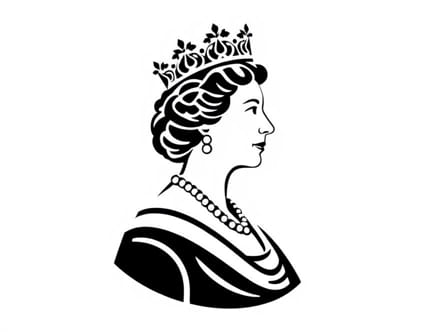
Queen Elizabeth I, one of England’s most iconic and influential monarchs, ruled from 1558 until her death in 1603. She presided over what is often referred to as the Elizabethan era, a period marked by flourishing arts, maritime exploration, and the strengthening of the English state. Known for her intelligence, political savvy, and fierce independence, Elizabeth I guided her kingdom through religious conflict, threats of invasion, and internal unrest. Her reign left a lasting legacy on British history and identity, and she continues to be a subject of fascination and admiration around the world.
Early Life and Background
Elizabeth was born on September 7, 1533, at Greenwich Palace to King Henry VIII and his second wife, Anne Boleyn. Her birth was a disappointment to her father, who had desperately hoped for a male heir. When Anne Boleyn was executed in 1536, Elizabeth was declared illegitimate and removed from the line of succession.
Education and Intelligence
Despite her early setbacks, Elizabeth received an exceptional education. She was tutored by some of the finest scholars of her time and became fluent in several languages, including Latin, French, and Italian. Her sharp mind and strong command of classical literature helped shape her political and diplomatic skills in later life.
Path to the Throne
Elizabeth’s ascent to the throne was far from assured. After the death of her half-brother Edward VI, her Catholic half-sister Mary I took the crown. During Mary’s reign, Elizabeth, a Protestant, was imprisoned for allegedly plotting against the queen. Only after Mary’s death in 1558 did Elizabeth become queen at the age of 25.
Coronation and Early Challenges
Elizabeth’s coronation was a moment of hope for many in England. She inherited a kingdom plagued by religious division, economic troubles, and threats from powerful Catholic nations. One of her first acts as queen was to establish the Elizabethan Religious Settlement, which aimed to unify the country under a moderate form of Protestantism.
Religious Settlement and Policy
Religion was a central issue in Elizabeth’s reign. Her aim was to create a stable Church of England that would appease both Protestants and moderate Catholics, avoiding the bloody persecutions that had marked her sister’s rule.
The Act of Supremacy and Uniformity
- The Act of Supremacy (1559) declared Elizabeth the Supreme Governor of the Church of England.
- The Act of Uniformity required attendance at Anglican services and established a common prayer book.
- Elizabeth avoided extremes, allowing some religious flexibility while punishing open dissent.
This compromise helped maintain relative religious peace in England during a time when Europe was torn by sectarian wars.
Foreign Affairs and the Spanish Armada
Elizabeth’s foreign policy was cautious but strategic. She avoided entangling alliances and wars, preferring diplomacy backed by a strong navy. One of the most dramatic episodes of her reign was the conflict with Spain.
Rising Tensions with Spain
Spain, under King Philip II, was a Catholic superpower and viewed Elizabeth’s Protestant rule with hostility. English support for Protestant rebels in the Netherlands and the piracy of Spanish ships by English privateers heightened tensions.
The Spanish Armada
- In 1588, Spain launched the Armada to invade England and overthrow Elizabeth.
- Elizabeth rallied her forces and delivered her famous speech at Tilbury, declaring, I have the body of a weak and feeble woman, but I have the heart and stomach of a king.
- The Armada was decisively defeated by the English navy and bad weather, marking a turning point in European power dynamics.
Domestic Achievements and Cultural Flourishing
Elizabeth’s reign is often considered a golden age in English history. Economically and culturally, the country experienced significant growth. Her policies encouraged trade and exploration, and she was a great patron of the arts.
Exploration and Expansion
Under Elizabeth’s rule, explorers like Sir Francis Drake and Sir Walter Raleigh undertook voyages that expanded England’s global influence. Although colonization was in its early stages, these expeditions laid the groundwork for the British Empire.
The Elizabethan Renaissance
- Theaters flourished, with William Shakespeare, Christopher Marlowe, and others producing works that remain influential today.
- Architecture and fashion reflected the prosperity and optimism of the age.
- The queen herself became a cultural icon, inspiring poems, portraits, and plays.
Personal Life and the Virgin Queen
Elizabeth never married, despite numerous suitors and political proposals. Her status as the ‘Virgin Queen’ became part of her public image and was used to symbolize her devotion to England above all personal interests.
Reasons for Remaining Unmarried
- Marriage could have complicated her authority by giving power to a foreign prince or noble.
- Elizabeth skillfully used courtship as a diplomatic tool, keeping foreign leaders hopeful and engaged.
- Her independence strengthened her image as a sovereign who ruled in her own right.
Later Years and Legacy
Elizabeth ruled for 45 years, bringing a period of relative stability to a previously turbulent kingdom. In her later years, she faced challenges including war expenses, internal unrest, and economic difficulties. Nevertheless, she maintained her popularity and control until her death in 1603.
Succession and the End of the Tudor Dynasty
With no heir, Elizabeth’s death marked the end of the Tudor dynasty. She was succeeded by James VI of Scotland, who became James I of England, uniting the crowns of England and Scotland.
Enduring Influence
- Elizabeth is remembered as one of England’s greatest monarchs.
- Her reign set the stage for the British Empire’s expansion.
- She remains a powerful symbol of strength, leadership, and national pride.
A Reign that Shaped a Nation
Queen Elizabeth I’s reign was defined by intelligence, diplomacy, and strong leadership. In an era dominated by male rulers, she established herself as a formidable and respected sovereign. Her efforts to unify her kingdom, promote the arts, and defend against foreign threats left a legacy that continues to define British identity. The Elizabethan era not only transformed England but also inspired generations to come with its blend of courage, creativity, and cultural achievement.