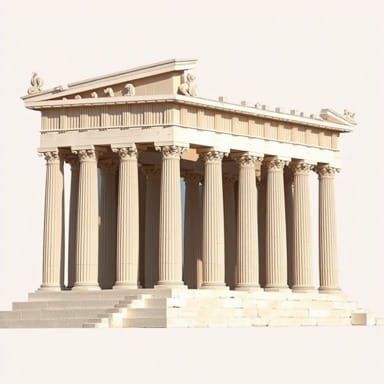
Among the many marvels of ancient Greece, the Parthenon stands as a crowning symbol of classical art and architecture. While its design and construction are feats in their own right, it is the magnificent sculptures that adorn this temple to Athena that truly capture the grandeur of its era. Behind these breathtaking works was a sculptor whose genius and leadership brought the vision of the Parthenon to life: Phidias. His name is often inseparably linked with the artistic brilliance of classical Athens, not only for his technical skill but for his role as the master sculptor overseeing the entire sculptural program of the Parthenon. Understanding Phidias’s contribution sheds light on the broader scope of art, culture, and politics during the Golden Age of Pericles.
The Life and Times of Phidias
Phidias (c. 480 – 430 BCE) was a Greek sculptor, painter, and architect widely regarded as one of the greatest sculptors of antiquity. Born in Athens or possibly in the nearby deme of Athens called Cholargos, Phidias flourished during the height of Athenian power in the 5th century BCE. His career was closely tied to that of the statesman Pericles, who commissioned him for several major artistic projects in Athens.
Phidias is best known for creating colossal statues and for his direction of the sculptural elements of the Parthenon. He was deeply influenced by the Greek ideals of proportion, harmony, and beauty, which are evident in every detail of his work. Although none of his original sculptures survive intact, his legacy is immortalized in Roman copies and historical records.
Phidias and the Parthenon Project
The Parthenon, built between 447 and 432 BCE, was designed by architects Ictinus and Callicrates under the guidance of Pericles. However, it was Phidias who was entrusted with supervising the vast and intricate sculptural decoration. The task was monumental: every aspect of the temple’s artwork, from the colossal statue of Athena inside the cella to the friezes and metopes on the outer walls, required coordination, design, and artistic vision.
The Cult Statue of Athena Parthenos
At the heart of the Parthenon stood the Athena Parthenos, a chryselephantine (gold and ivory) statue of the goddess Athena. This awe-inspiring sculpture stood approximately 12 meters tall and depicted the goddess standing in full armor, holding a shield in one hand and a small figure of Nike (Victory) in the other. Phidias designed and personally executed this statue, which became one of the wonders of the ancient world.
The statue symbolized Athenian power and divine protection. It not only served a religious function but also demonstrated Athens’ wealth and cultural superiority. Phidias’s mastery in combining opulent materials with refined design was unmatched, making this statue a pinnacle of classical art.
The Parthenon Frieze and Sculptural Program
Beyond the interior statue, Phidias directed the sculptural embellishments throughout the Parthenon. These include:
- The Pediments: The east pediment depicted the birth of Athena from the head of Zeus, while the west pediment illustrated the contest between Athena and Poseidon for the patronage of Athens. These scenes were filled with dynamic figures and a deep sense of realism.
- The Metopes: Ninety-two metopes encircled the temple, each depicting mythological battles, such as the Centauromachy (battle between Lapiths and centaurs), Gigantomachy (gods vs. giants), and Amazonomachy (Greeks vs. Amazons). These represented the triumph of order over chaos, a common theme in Greek art.
- The Ionic Frieze: Running around the inner cella, this 160-meter-long frieze portrayed the Panathenaic Procession, a festival in honor of Athena. This unique civic scene featured hundreds of figures in a unified, flowing composition, demonstrating Phidias’s ability to capture movement and human emotion in marble.
Phidias’s Artistic Legacy
Phidias’s work on the Parthenon set a new standard for sculptural excellence in ancient Greece. His attention to anatomical precision, drapery, and expression helped shape the classical ideal of beauty. More than just a technician, Phidias was a visionary who brought together religious, cultural, and political themes in a coherent and powerful visual narrative.
Despite his achievements, Phidias’s life was not without controversy. He faced accusations of embezzlement and impiety political attacks likely fueled by rival factions in Athens. According to historical accounts, he was charged with stealing some of the gold intended for the statue of Athena and with including his own likeness, as well as Pericles’s, in the shield of the goddess a move interpreted as blasphemous. He was imprisoned and possibly died in jail, though some accounts suggest he fled to Olympia, where he created another masterpiece: the statue of Zeus, later considered one of the Seven Wonders of the Ancient World.
The Cultural Importance of the Parthenon Sculptures
Phidias’s sculptures were not merely decorative; they played a significant role in communicating the ideals of Athens. The themes of order, piety, civic pride, and divine favor were embedded in every relief and statue. Through his supervision, the Parthenon became more than a temple it was a monument to Athenian identity and ambition.
Moreover, Phidias’s work influenced countless generations of artists. During the Roman period, sculptors created replicas of his statues, keeping his style alive long after his originals had been lost. His legacy also inspired Renaissance and Neoclassical artists, who looked to ancient Greece for models of beauty and harmony.
Modern Appreciation and Controversies
Today, many of the Parthenon’s sculptures, often referred to as the Elgin Marbles, reside in the British Museum. Originally removed from the Parthenon in the early 19th century by Lord Elgin, their presence in London has sparked intense debate about cultural ownership. Greece has long called for their return, citing their deep connection to Greek heritage and identity.
Despite their scattered locations, the sculptures continue to be admired for their technical brilliance and emotional depth. Phidias’s vision remains central to discussions about ancient art and the power of sculpture to convey complex human ideas.
Phidias, the sculptor who oversaw the sculptures placed in the Parthenon, was more than a craftsman he was an artistic leader who left an indelible mark on the history of Western art. His ability to translate myth, religion, and civic pride into stone made the Parthenon a lasting symbol of Athenian greatness. Though time and history have removed much of his physical work, Phidias’s legacy endures in the admiration of artists, historians, and lovers of beauty across the world.