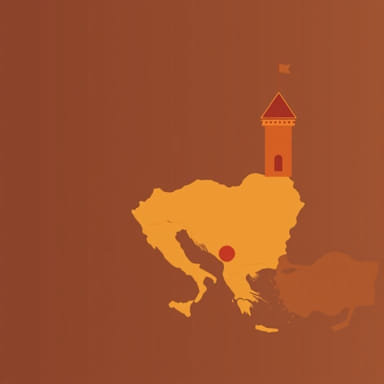
The Byzantine Empire, often called the Eastern Roman Empire, stood as a powerful continuation of the Roman legacy for over a thousand years after the fall of the Western Roman Empire. Central to understanding Byzantium is the concept of ‘Romanland,’ a term that reflects the unique intertwining of Roman identity, ethnicity, and imperial governance in this medieval empire. In Byzantium, the idea of being ‘Roman’ transcended ethnicity, blending diverse peoples under a common imperial culture and political order. This fusion shaped not only the empire’s internal cohesion but also its relations with neighboring peoples and its legacy in history.
Byzantium and the Concept of Roman Identity
Despite the Western Roman Empire’s collapse in 476 AD, the Eastern Roman Empire continued to flourish with its capital at Constantinople. Its citizens identified as ‘Romans’ (Rhomaioi in Greek), and this self-identification played a critical role in maintaining imperial unity amid ethnic diversity. Romanland was more than just a geographic term; it represented a cultural and political identity that linked Byzantium to its ancient Roman roots.
The Roman Identity Beyond Ethnicity
The Byzantine Empire was home to many ethnic groups, including Greeks, Armenians, Slavs, Syrians, and others. However, these diverse populations were unified by a shared Roman political identity, law, and imperial tradition.
- Roman citizenship was a unifying status regardless of ethnic background.
- Greek language gradually replaced Latin as the administrative language but the Roman legal system remained foundational.
- Orthodox Christianity became a core element of Romanland identity, binding the empire’s subjects spiritually and politically.
Roman Law and Administration
The Byzantine Empire preserved and adapted Roman law, particularly through the Corpus Juris Civilis compiled under Emperor Justinian I in the 6th century. This legal tradition reinforced the imperial idea of Rome as a single, lawful entity, transcending ethnic divisions and providing a framework for governance.
Ethnic Diversity within Romanland
While Roman identity was inclusive, Byzantium’s population was ethnically heterogeneous. This diversity was both a strength and a challenge, requiring sophisticated methods of governance to maintain cohesion within the empire’s borders.
Major Ethnic Groups in Byzantium
- Greeks: The dominant cultural and linguistic group in later Byzantium, shaping much of the empire’s identity.
- Armenians: A significant minority, contributing military leaders, intellectuals, and administrators.
- Slavs: Settled in the Balkans, some integrated into Byzantine society, others remained semi-autonomous.
- Syrians, Copts, and other Middle Eastern groups: Present in eastern provinces, adding to the empire’s multicultural fabric.
Assimilation and Autonomy
The empire used a blend of assimilation and local autonomy to manage its diverse populations. While Roman law and Orthodox Christianity were promoted empire-wide, local customs and languages were often tolerated, especially in distant provinces. This flexibility allowed Romanland to endure despite ethnic differences.
Empire and Identity Politics
Byzantine rulers skillfully used the concept of Romanland and Roman identity as tools to legitimize their authority and foster loyalty. The emperor was seen as the earthly representative of Roman order and Orthodox faith, a unifying figure above ethnic distinctions.
The Role of Religion
Orthodox Christianity was integral to Byzantine identity, shaping not only spirituality but also politics and social cohesion. The Church and state were closely linked, reinforcing the emperor’s role as protector of the true faith and guardian of Roman order.
- Religious uniformity was encouraged to maintain unity.
- Church rituals and imperial ceremonies emphasized the connection between Roman legacy and divine authority.
- Heretics and non-Orthodox groups were often marginalized or persecuted, highlighting the religious aspect of Romanland identity.
Byzantium’s Diplomatic and Military Relations
The empire’s identity as Romanland influenced its diplomacy and warfare. Byzantium viewed itself as the continuation of Rome’s universal mission and often engaged with neighboring barbarian peoples as both rulers and civilizers.
- Byzantine emperors used titles and rituals that emphasized their Roman legitimacy.
- Diplomatic missions often sought to spread Orthodox Christianity and Roman culture.
- Military campaigns were framed as defense of Roman lands and faith against external threats.
Legacy of Romanland Identity
The Romanland concept endured even after the fall of Constantinople in 1453, influencing successor states and modern national identities. The idea that the Byzantine Empire was the Roman empire helped preserve ancient Roman traditions, law, and culture into the medieval and early modern periods.
Influence on Eastern Europe and Russia
Byzantine Roman identity heavily influenced Eastern Orthodox Slavic nations, especially Russia, which considered itself the Third Rome. This claim underscored the lasting power of Romanland as a political and religious ideal beyond Byzantium itself.
Impact on Modern Scholarship and Culture
Modern historians study Romanland to understand how Byzantium balanced diversity and unity, ethnicity and empire. The Byzantine model shows that identity can be flexible and politically constructed, adapting to changing historical circumstances.
Romanland in Byzantium was more than a territorial description; it was a dynamic and inclusive identity that united diverse peoples under the legacy of Rome. Through law, religion, and imperial authority, Byzantium forged a unique empire where ethnicity was secondary to political and cultural belonging. This legacy continues to inform our understanding of empire, identity, and cultural continuity in world history.