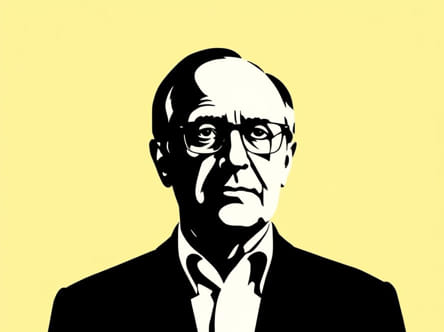
Erich Honecker was a prominent East German political leader who played a crucial role in the history of the German Democratic Republic (GDR), commonly known as East Germany. His leadership spanned from the early 1970s until the late 1980s, a period marked by Cold War tensions, strict communist rule, and ultimately the beginning of the end for East Germany. Honecker’s influence extended over political, social, and economic aspects of the GDR, making him a key figure in understanding East German history and the broader context of European division during the Cold War.
Early Life and Political Rise
Erich Honecker was born on August 25, 1912, in Neunkirchen, Germany. Coming from a working-class family, he became involved in communist politics at a young age, joining the Young Communist League in the 1920s and later the Communist Party of Germany (KPD). His early political activity led to his arrest and imprisonment during the Nazi regime because of his opposition to fascism.
After World War II, Honecker emerged as an influential figure within the Socialist Unity Party (SED), which was the ruling communist party of East Germany. His organizational skills and ideological commitment helped him rise through the party ranks, ultimately positioning him as a leading figure in the GDR’s government.
Key Points in Early Career
- Joined communist youth organizations in the 1920s.
- Imprisoned by Nazis for anti-fascist activities.
- Post-war political involvement in Soviet-occupied East Germany.
- Steady rise in the Socialist Unity Party leadership.
Leadership of East Germany
Honecker became the General Secretary of the Socialist Unity Party in 1971, effectively making him the leader of East Germany. His tenure was characterized by efforts to maintain a strong socialist state closely aligned with the Soviet Union. Honecker focused on political stability, economic planning, and social welfare, while also suppressing dissent and enforcing strict control over the population.
Under Honecker’s leadership, the Berlin Wall, erected in 1961, remained a symbol of division between East and West Germany and a barrier preventing East Germans from fleeing to the West. Honecker famously defended the wall and the GDR’s policies, emphasizing security and ideological purity.
Major Aspects of Honecker’s Rule
- Consolidation of the socialist state and close ties with the USSR.
- Promotion of industrial and social policies aligned with Marxist-Leninist principles.
- Strict surveillance and control through the Stasi secret police.
- Maintenance of the Berlin Wall as a symbol and tool of division.
Challenges and Controversies
Despite initial stability, Honecker’s leadership faced increasing challenges in the 1980s. Economic stagnation, growing public dissatisfaction, and the influence of reform movements across Eastern Europe pressured the GDR’s rigid system. Honecker resisted calls for reform and maintained a hardline approach, which ultimately isolated East Germany from the changing political climate sweeping the Soviet bloc.
Internationally, Honecker was criticized for human rights abuses, censorship, and the repression of political opposition. Internally, the population’s frustration grew due to economic difficulties and lack of freedoms. This tension culminated in mass protests and movements calling for change, particularly in 1989, leading to the fall of the Berlin Wall and the collapse of the East German regime.
Key Issues During Late Leadership
- Economic decline and inefficiency in state-run industries.
- Repression of political dissent and restrictions on freedom.
- Failure to adapt to reformist pressures from the Soviet Union and citizens.
- Growing unrest culminating in the fall of the Berlin Wall in 1989.
Downfall and Later Years
In October 1989, amid escalating protests and political pressure, Erich Honecker was forced to resign from his leadership positions. He was succeeded by Egon Krenz, who attempted to initiate reforms to save the socialist regime. However, these efforts were too late to prevent the rapid unraveling of East Germany.
Following German reunification in 1990, Honecker faced legal proceedings related to his role in human rights violations during his rule. He fled to the Soviet Union but was eventually extradited back to Germany for trial. Due to ill health, the case was discontinued, and he spent his remaining years in exile, passing away in Chile in 1994.
Final Years and Legacy
- Forced resignation amid political crisis in 1989.
- Exile in the Soviet Union and later Chile.
- Legal challenges over his governance and human rights record.
- Died in 1994, leaving a complex legacy.
Legacy and Historical Significance
Erich Honecker’s legacy is deeply intertwined with the history of East Germany and the Cold War. He is remembered as a staunch defender of Soviet-style communism and as a leader whose policies helped sustain the division of Germany for nearly three decades. While some credit him with maintaining social order and welfare, many criticize his authoritarian rule, suppression of freedoms, and resistance to reform.
The fall of the Berlin Wall and the end of the GDR marked the failure of Honecker’s vision, but his leadership period remains a crucial chapter in 20th-century history. His life illustrates the complexities of governing in a highly polarized world and the challenges faced by communist regimes in the late Cold War era.
Historical Perspectives
- Symbol of East German communist rule and Cold War division.
- Example of authoritarian governance and resistance to change.
- Focus on ideological commitment over political flexibility.
- His era provides lessons on the limits of authoritarian control in modern history.
Erich Honecker was a pivotal figure in the history of East Germany, representing both the strengths and weaknesses of communist leadership during the Cold War. His rise from a working-class background to the pinnacle of East German politics reflects his commitment to Marxist-Leninist ideals and his ability to maintain control over a challenging political landscape. However, his refusal to embrace reform and his harsh governance contributed to the eventual collapse of the GDR. Understanding who Erich Honecker was is essential for grasping the dynamics of Cold War Europe and the complex legacy of divided Germany.